Arantxa Cortés
Chella, 1997
sobre / about


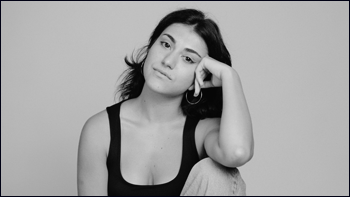
Biografía. / Biography.
Nacida en 1997 en el mismo momento en que su padre se compraba un bocata de tortilla en el comedor de un hospital público. Crecida en un pueblo de los que dicen ser de mala muerte entre olivos y noches de verbena. No recuerda cuándo empezó a escribir, pero sabe que en su familia materna siempre se ha llevado eso de esconder las palabras en papel. Ella dejó de seguir ese legado abriendo al mundo sus textos inconexos guardados en las notas del móvil. Pero bueno, vamos al meollo. Diplomada en arte dramático por la Escuela del Actor (Valencia) se ha formado con autores como Sergio Blanco, Paco Zarzoso o Sanchis Sinisterra. Tras finalizar la carrera escribió su primera pieza "Els diumenges són dies de descans" (2021) que resultó ganadora del premio Ciutat de Castelló de Teatre en 2022. Y así fue cómo se motivó para escribir su segunda pieza "CORE o de cómo toqué el cielo y me tragué un ángel al caer" (2022) que recibió las ayudas del Institut Valencià de Cultura en 2022. En 2023 es seleccionada para las residencias de escritura del Institut Valencià de Cultura para el desarrollo de "La fe. Otra puta obra de jóvenes que pierden las formas" (2023) bajo la tutorización de Paco Zarzoso, estrenada como lectura dramatizada en el Teatro Rialto en el mes de noviembre del mismo año.
Born in 1997, right at the moment her father was buying a tortilla sandwich in the cafeteria of a public hospital. She grew up in a so-called godforsaken village, surrounded by olive trees and summer night festivals. She doesn’t remember when she started writing, but she knows that on her mother’s side it was always common to hide words away on paper. She broke that legacy by opening her world through the disjointed texts she stored in her phone notes. But let’s get to the point. A graduate in Dramatic Art from Escuela del Actor (Valencia), she has trained with authors such as Sergio Blanco, Paco Zarzoso and Sanchis Sinisterra. After finishing her degree, she wrote her first play Els diumenges són dies de descans (2021), which won the Ciutat de Castelló de Teatre Prize in 2022. That success inspired her to write her second play CORE o de cómo toqué el cielo y me tragué un ángel al caer (2022), which received support from the Institut Valencià de Cultura that same year. In 2023 she was selected for the writing residencies of the Institut Valencià de Cultura to develop La fe. Otra puta obra de jóvenes que pierden las formas (2023) under the mentorship of Paco Zarzoso, which premiered as a staged reading at Teatro Rialto in November of that year.
Escritura. / Style.
«Escribo de manera automática. Sin saber qué quiero contar ni cómo lo quiero expresar. Escribo, escribo, escribo hasta que un día dejo de escribir y leo lo que llevo acumulando meses en notas del móvil. Entonces encuentro nexos en común y descubro lo que me lleva perturbando durante todo ese periodo de tiempo. Ahí empiezo a imaginarlo con diferentes voces, personas, o seres inanimados. Sueño mucho y muy fuerte durante esa fase de escritura. Podría decir que mi escritura es un copy-paste de conversaciones de bar entre amigos, noches caóticas, o eventos familiares multitudinarios que se abren con una misa. Me gusta escuchar y crear a partir de una palabra, de un "Gol" o de un brindis. Escribo desde lo banal, desde lo más puramente vulgar. De ahí mi compañía "La Vulgar". Escribo desde ahí porque mi mundo parte de ese imaginario para llegar a lo hondo, a los temas universales que me interesan, siempre con un componente político o social detrás. Dicen que mis piezas son como un rompecabezas, que no sabes de lo que hablo hasta que encuentras la pieza clave, y entonces cada palabra tiene sentido. Me gusta el ritmo, el diálogo corto y fluido, pero siempre dejo un hueco para la poética, la poética vulgar que une a castizos con precarios, a la élite lingüista con la creación popular de la palabra: el vulgo.» (Arantxa Cortés).
«I write automatically. Without knowing what I want to say or how I want to say it. I write, write, write until one day I stop and read what I’ve been piling up for months in my phone notes. Then I find common threads and discover what has been troubling me all that time. That’s when I start to imagine it with different voices, people, or inanimate beings. I dream a lot and very intensely during that stage of writing. I could say my writing is a copy-paste of bar conversations among friends, chaotic nights, or large family gatherings that begin with a mass. I like to listen and create from a word, from a “Goal” or a toast. I write from the banal, from what is purely vulgar. That’s where my company La Vulgar comes from. I write from there because my world grows out of that imagery to reach deeper, universal themes that interest me, always with a political or social undercurrent. People say my plays are like puzzles—you don’t know what I’m talking about until you find the key piece, and then every word makes sense. I like rhythm, short and fluid dialogue, but I always leave space for poetry, the vulgar poetry that brings together the castizo with the precarious, the linguistic elite with the popular creation of words: the vulgus.» (Arantxa Cortés).
Obras. / Plays.
-
2023. LA FE. OTRA PUTA OBRA DE JÓVENES QUE PIERDEN LAS FORMAS
-
(Lectura dramatizada) Teatro Rialto, Valencia
Residencias de escritura Josep Lluís Sirera, Institut Valencià de Cultura
-
2022. CORE O DE CÓMO TOQUÉ EL CIELO Y ME TRAGUÉ UN ÁNGEL AL CAER
-
La Rambleta, Valencia, 2024
Ajudes a la Creació d’Escriptura Escènica, Institut Valencià de Cultura
Revista "Red Escénica"
-
2021. ELS DIUMENGES SÓN DIES DE DESCANS
-
Premio Ciutat de Castelló de Teatro, 2022
Ajuntament de Castelló
-
Leyenda / Legend
-
Estreno / Premio / Beca / Publicación
Premiere / Award / Grant / Publication
Residencias de escritura Josep Lluís Sirera, Institut Valencià de Cultura
Ajudes a la Creació d’Escriptura Escènica, Institut Valencià de Cultura
Revista "Red Escénica"
Ajuntament de Castelló
Premiere / Award / Grant / Publication