
Nuestra vida
Aurora Parrilla Camacho, 2020
sobre / about

Datos técnicos. / Technical details.
Duración
>60'
Duration
>60'
Personajes
5
Characters
5
Actrices
2
Actresses
2
Actores
3
Actors
3
Público
Adulto
Audience
Adult
Formato
Pequeño
Format
Small
Sinopsis. / Synopsis.
Nuestra vida es una obra dramática que nace a partir de la novela de Antón Chéjov "Mi vida, relato de un provinciano". En ella vemos cómo Chéjov, personaje de la obra, rompe con su vida en la capital y se va a vivir al campo en busca de una vida merecida, honrada, lejos del sistema corrupto de esclavizadores y esclavizados, que rige la ciudad. Se aleja de su hermana, de su mejor amigo, el Doctor, de su padre... Y allí, en el campo, se enamora de Masha, se enamora de un pájaro. Es alejándose de los valores que tanto odia de la ciudad y de quienes los encarnan, como consigue convertirse precisamente en aquello de lo que huía.
Nuestra vida is inspired by the novel My Life: The Story of a Provincial by Anton Chekhov. In it, we see how Chekhov—who becomes a character in the play—breaks away from his life in the capital and moves to the countryside in search of a life that is worthy, honest, far from the corrupt system of enslavers and enslaved that rules the city. He distances himself from his sister, his best friend the Doctor, and his father... And there, in the countryside, he falls in love with Masha, he falls in love with a bird. It is by moving away from the values he so despises in the city—and from those who embody them—that he ends up becoming exactly what he was running from.
Notas. / Notes on the piece.
¿Por qué un escritor escribe sobre sí mismo? ¿Sobre su vida? Y ¿por qué escribe sobre aquello que hizo mal, sobre el daño que causó a los que más quería? Estas fueron las preguntas que me surgieron tras leer la novela "Mi vida, relato de un provinciano" de Antón Chéjov. La respuesta que les di fue: para pedirse perdón a sí mismo. A veces no es suficiente con ser perdonado, a veces es mucho más complicado conseguir el perdón propio que el ajeno y, desgraciadamente, este es el único que te dará paz. Creo que esto es de lo que habla, esencialmente, Chéjov cuando escribió la novela y lo que conecta directamente con la razón por la que yo, a día de hoy, escribo.
Why does a writer write about themselves? About their life? And why do they write about the things they did wrong, about the harm they caused to those they loved most? These were the questions that came to me after reading the novel Mi vida, relato de un provinciano by Anton Chekhov. The answer I gave myself was: to ask for their own forgiveness. Sometimes, being forgiven isn’t enough; sometimes, gaining your own forgiveness is far more difficult than gaining someone else’s—and sadly, it’s the only kind that can bring you peace. I believe this is, essentially, what Chekhov was speaking about when he wrote that novel, and it connects directly to the reason why I write today.
Otros datos. / Other information.
Inédita
sobre / about


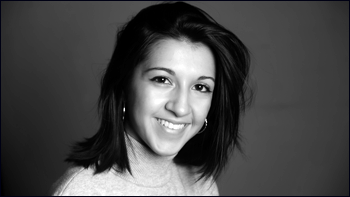

Biografía. / Biography.
Aurora Parrilla Camacho inicia su recorrido artístico en la danza. Por ello, decide estudiar Bachillerato de Artes Escénicas en el I.E.S. Antonio Machado de Alcalá de Henares. Es allí donde descubre su vocación teatral, recibiendo formación del pedagogo, dramaturgo y director Javier De Dios. Se interesa principalmente por la interpretación y realiza talleres basados en el método de Mijaíl Chéjov impartidos por David Ojeda. En 2016 asiste al III Taller de Dramaturgia de La Joven Compañía coordinado por Fernando J. López, donde tiene encuentros con distintos dramaturgos contemporáneos, y en 2017 comienza su carrera de Dirección Escénica y Dramaturgia en la RESAD. Desde entonces concilia su labor de dramaturga y directora, concibiendo ambas tareas como indisolubles en sus procesos creativos.
Aurora Parrilla Camacho began her artistic journey through dance, which led her to study Performing Arts for her Baccalaureate at I.E.S. Antonio Machado in Alcalá de Henares. It was there that she discovered her passion for theatre, receiving training from pedagogue, playwright and director Javier De Dios. Drawn especially to acting, she took workshops based on Michael Chekhov’s method, taught by David Ojeda. In 2016, she took part in the 3rd Playwriting Workshop of La Joven Compañía, coordinated by Fernando J. López, where she met various contemporary playwrights. The following year, she began her studies in Directing and Playwriting at RESAD. Since then, she has combined her work as a playwright and director, understanding both roles as inseparable in her creative process.
Escritura. / Style.
«Escribo para comprender. Comprender me lleva a perdonar o a perdonarme con aquello que me duele. Mis creaciones nacen de una necesidad reconciliadora con el mundo en el que vivimos, con los acontecimientos que vemos, sufrimos o provocamos. Son algo así como una oportunidad de desahogo y denuncia. También es un lugar de investigación, de poner en cuestión las realidades que se nos cuentan como verdaderas en nuestro día a día, debatirlas en público, hacer reflexionar, traspasar fronteras y encontrar luces y sombras en aquellos lugares que nos son desconocidos. En mis textos he tratado temas como la violencia machista, la búsqueda de la verdad, las estructuras de poder, el desapego y el miedo al paso irrevocable del tiempo. A la hora de escribir tengo muy presentes a Antón Chéjov y Harold Pinter, siendo para mí, no solo referentes tanto de estilo como de temas, sino también impulsores de que hoy por hoy quiera dedicarme a la dramaturgia.» (Aurora Parrilla Camacho).
«I write in order to understand. And understanding often leads me to forgive—or to forgive myself—for what hurts. My creations are born from a reconciliatory need: to make peace with the world we live in, with the events we witness, endure, or even cause. They are a way to vent, to denounce. They are also a space for inquiry, for questioning the so-called truths we’re told in our daily lives—questioning them publicly, provoking reflection, crossing boundaries, and finding light and shadow in the places we don't yet know. My work has explored themes such as gender-based violence, the search for truth, power structures, emotional detachment, and the fear of time’s irreversible passing. When I write, I always have Anton Chekhov and Harold Pinter in mind—not only as stylistic and thematic references, but as the very reason I chose to pursue playwriting.» (Aurora Parrilla Camacho).
Obras. / Plays.
-
2022. LA CIUDAD ALEGRE Y CONFIADA
-
Teatro Español, Madrid
-
2021. LUMBRE
-
Acotaciones, Revista de investigación y creación teatral
-
2021. MOMENTOS PERFECTOS
-
Ediciones Antígona, colección "Teatro Promoción RESAD 2021"
-
2020. NUESTRA VIDA
-
Inédita
-
2020. UMOJA
-
Inédita
-
2019. SIMIENTES
-
Editorial Fundamentos
-
Leyenda / Legend
-
Estreno / Premio / Beca / Publicación
Premiere / Award / Grant / Publication
Premiere / Award / Grant / Publication
sus obras en / their works on

-
 2021 >60' 1 2
MOMENTOS PERFECTOS
Aurora Parrilla Camacho -
 2021 30'-60' 0 2
LUMBRE
Aurora Parrilla Camacho -
 2022 >60' 3 5
LA CIUDAD ALEGRE Y CONFIADA
Aurora Parrilla Camacho -
 2020 >60' 2 3
NUESTRA VIDA
Aurora Parrilla Camacho -
 2020 30'-60' 6-10 3
UMOJA
Aurora Parrilla Camacho -
 2019 30'-60' 2 3
SIMIENTES
Aurora Parrilla Camacho