Tu imagen sola
Pablo Iglesias Simón y Borja Ortiz de Gondra, 2003
sobre / about

Datos técnicos. / Technical details.
Duración
>60'
Personajes
6-10
Actrices
1
Actores
0
Público
Adulto
Formato
Mediano
Sinopsis. / Synopsis.
Agosto 2001. Marta, reportera de una de las principales cadenas de televisión del país, es enviada a Afganistán para realizar un reportaje de investigación sobre la situación de la mujer. Terminado el mes, y grabado todo el material necesario, Marta decide tomarse unas merecidas vacaciones en las paradisíacas playas Tailandesas. Los acontecimientos del 11 de septiembre la sorprenden entre daiquiris y cocoteros y decide regresar a Madrid para terminar su reportaje. En Madrid, las cosas han cambiado. La situación de la mujer en Afganistán ya no es importante. Ya no es noticia. A Marta le encargan cubrir un asunto nacional: un escándalo financiero de gran envergadura. Marta en una noche loca conoce a Alfonso con el que mantiene una relación ocasional. Al día siguiente, se destapa un nuevo dato del escándalo: Alfonso es uno de los máximos implicados. Marta se convierte en noticia. Pasa de juzgar a ser juzgada. Así comienza un nuevo viaje que le llevará a un destino desconocido: ella misma.
August 2001. Marta, a reporter for one of the country’s leading television networks, is sent to Afghanistan to produce an investigative report on the situation of women. After a month, having recorded all the necessary material, she decides to take a well-deserved holiday on the idyllic beaches of Thailand. The events of September 11 catch her between daiquiris and palm trees, and she decides to return to Madrid to complete her report. In Madrid, things have changed: the situation of women in Afghanistan is no longer important—it is no longer news. Marta is assigned to cover a domestic story: a major financial scandal. During a wild night out, she meets Alfonso and begins a brief affair with him. The next day, a new development in the scandal emerges: Alfonso is one of the main figures involved. Marta becomes the news. She goes from judging to being judged. Thus begins a new journey that will lead her to an unknown destination: herself.
Notas. / Notes on the piece.
Se puede consultar información adicional sobre el texto teatral y reseñas en la página web del autor.
Additional information about the play and reviews can be found on the author’s website.
Otros datos. / Other information.
XIX Premio de Teatro Carlos Arniches 2003
Publicación: Ayuntamiento de Alicante y XII Muestra de Teatro Español de Autores Contemporáneos
sobre / about


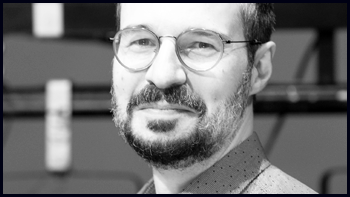

Biografía. / Biography.
Pablo Iglesias Simón (Madrid, 1977) es titulado superior en Dirección Escénica por la Real Escuela Superior de Arte Dramático de Madrid (RESAD). Obtuvo el Premio Extraordinario al doctorarse en Comunicación Audiovisual en la Universidad Complutense de Madrid con la tesis Trasvases discursivos del teatro de finales del siglo XIX y principios del XX al cine primitivo y al cine clásico de Hollywood. En 2010 termina sus estudios de Magia e Ilusionismo, completando los tres niveles de la Gran Escuela de Magia de Ana Tamariz. En el campo teatral ha trabajado como director de escena, diseñador de espacios sonoros y dramaturgo. Empezó dirigiendo textos de autores contemporáneos como Heiner Müller o Sarah Kane y, a partir de 2002, decidió ocuparse de sus propios textos, presentando en el Festival Escena Contemporánea su montaje 11-N_11-E. En noviembre de 2009 estrena El lado oeste del Golden Gate, montaje por el que le concedieron el Premio «José Luis Alonso» al mejor director joven 2010. La última obra que ha dirigido es Modelos Animales, dramaturgia basada en un relato de Aixa de la Cruz, estrenada en febrero de 2017 en la Sala Cuarta Pared de Madrid. Ha realizado los espacios sonoros de más de una decena de montajes teatrales, trabajando para compañías privadas y para el Centro Dramático Nacional. Asimismo, ha publicado los textos dramáticos 11-N; Sin móvil aparente, finalista del III Premio de Teatro Exprés 2002; Alicia frente al espejo; Tu imagen sola, coescrito con Borja Ortiz de Gondra y ganador del XIX Premio de Teatro Carlos Arniches-Ciudad de Alicante 2003; El lado oeste del Golden Gate, finalista del XXXIII Premi Born de Teatre 2008; y Justo en medio del paralelo 38, finalista del XXXVI Premi Born de Teatro 2011. Varios de sus textos dramáticos se han representado en España, Italia, Grecia y El Salvador. Tras desarrollar una labor docente en cursos de posgrado en materias teatrales heterogéneas y en la Facultad de Ciencias de la Información en el ámbito de la realización cinematográfica, en 2006 se convirtió en profesor titular funcionario de Dirección de Escena en la RESAD, donde ha impartido asignaturas como Historia de la Escenificación, Espacio Sonoro o Prácticas de Escenificación. Entre 2008 y 2013 ostentó el cargo de jefe del Departamento de Dirección Escénica y, del 1 de julio de 2017 al 30 de junio de 2025, fue director de la Real Escuela Superior de Arte Dramático de Madrid (RESAD). Del 6 de mayo de 2022 al 30 de junio de 2025 fue presidente de ACESEA (Asociación Española de Centros Superiores de Enseñanzas Artísticas), en representación de la cual formó parte del Consejo Superior de Enseñanzas Artísticas del 4 de marzo de 2023 al 21 de noviembre de 2025. El 21 de noviembre de 2025 fue nombrado consejero del Consejo Superior de Enseñanzas Artísticas en calidad de personalidad de reconocido prestigio. Compatibiliza las tareas docentes en la RESAD con el desarrollo de una labor investigadora en los campos teatral y cinematográfico, que se ha traducido en la presentación de ponencias en congresos y seminarios en España, Francia y Chile, y en la publicación de más de una veintena de artículos en distintas revistas especializadas de España y Brasil. Ha escrito tres libros: Postproducción digital de sonido por ordenador, reeditado en México para su difusión en el ámbito hispanoamericano con el título Postproducción digital de sonido por computadora; De las tablas al celuloide, ganador del Premio «Leandro Fernández de Moratín» para estudios teatrales 2008; y Los Meininger y el nacimiento de la dirección escénica, finalista del Premio «Leandro Fernández de Moratín» para estudios teatrales 2024. Además, ha colaborado en los libros colectivos Análisis de la dramaturgia, Cinema i teatre: influències i contagis, Creadores jóvenes en el ámbito teatral, Teatro y música en los inicios del siglo XXI y Être ou ne pas être... quantique: Le théâtre contemporain à l'épreuve de la physique moderne.
Pablo Iglesias Simón (Madrid, 1977) holds a higher degree in Stage Direction from the Royal School of Dramatic Art of Madrid (RESAD). He was awarded the Extraordinary Prize upon completing his PhD in Audiovisual Communication at the Complutense University of Madrid with the dissertation Trasvases discursivos del teatro de finales del siglo XIX y principios del XX al cine primitivo y al cine clásico de Hollywood. In 2010, he completed his studies in Magic and Illusion, finishing the three levels of the Ana Tamariz School of Magic. In the field of theatre, he has worked as a stage director, sound designer, and playwright. He began by directing texts by contemporary authors such as Heiner Müller and Sarah Kane and, from 2002 onwards, decided to focus on his own writing, presenting his production 11-N_11-E at the Escena Contemporánea Festival. In November 2009, he premiered El lado oeste del Golden Gate, for which he was awarded the “José Luis Alonso” Prize for Best Young Director 2010. The most recent work he has directed is Modelos Animales, a dramaturgy based on a short story by Aixa de la Cruz, premiered in February 2017 at Sala Cuarta Pared in Madrid. He has designed sound for more than a dozen theatre productions, working for private companies as well as for the Centro Dramático Nacional. He has also published the dramatic texts 11-N; Sin móvil aparente, finalist for the 3rd Premio de Teatro Exprés 2002; Alicia frente al espejo; Tu imagen sola, co-written with Borja Ortiz de Gondra and winner of the 19th Premio de Teatro Carlos Arniches–Ciudad de Alicante 2003; El lado oeste del Golden Gate, finalist for the 33rd Premi Born de Teatre 2008; and Justo en medio del paralelo 38, finalist for the 36th Premi Born de Teatro 2011. Several of his plays have been staged in Spain, Italy, Greece, and El Salvador. After teaching postgraduate courses in a range of theatre disciplines and at the Faculty of Information Sciences in the field of film directing, in 2006 he became a tenured professor of Stage Direction at RESAD, where he has taught subjects such as History of Staging, Sound Design, and Staging Practice. Between 2008 and 2013, he served as Head of the Stage Direction Department and, from 1 July 2017 to 30 June 2025, he was Director of the Royal School of Dramatic Art of Madrid (RESAD). From 6 May 2022 to 30 June 2025, he was President of ACESEA (Spanish Association of Higher Arts Education Institutions), in representation of which he was a member of the Higher Council for Arts Education from 4 March 2023 to 21 November 2025. On 21 November 2025, he was appointed member of the Higher Council for Arts Education as a distinguished expert. He combines his teaching duties at RESAD with ongoing research in theatre and film, which has led to presentations at conferences and seminars in Spain, France, and Chile, as well as to the publication of more than twenty articles in specialised journals in Spain and Brazil. He has written three books: Postproducción digital de sonido por ordenador, republished in Mexico for distribution in the Spanish-speaking world under the title Postproducción digital de sonido por computadora; De las tablas al celuloide, winner of the “Leandro Fernández de Moratín” Prize for Theatre Studies 2008; and Los Meininger y el nacimiento de la dirección escénica, finalist for the “Leandro Fernández de Moratín” Prize for Theatre Studies 2024. He has also contributed to collective volumes including Análisis de la dramaturgia, Cinema i teatre: influències i contagis, Creadores jóvenes en el ámbito teatral, Teatro y música en los inicios del siglo XXI, and Être ou ne pas être... quantique: Le théâtre contemporain à l'épreuve de la physique moderne.
Escritura. / Style.
Pablo Iglesias Simón escribe interrogantes. Que crea contra sí mismo. Contra sus resistencias. Saliendo de su zona de confort y adentrándose en lo que no cree no saber. Esperando compartirlos. Buscando en los demás lo que aún está por descubrir. Escribiendo para jugar con el lector. Con la forma que se pone en papel y con los temas y conflictos que se ponen en su mente. Con una escritura que solo puede completarse con un lector que se adentre en ella, la reescriba y la haga propia. Escribe para retar y estimular a la escena. Para amplificar los recursos del lenguaje escénico. Para interrogar la escena y través de ella al espectador. Escribe universos híbridos. Mestizos. Donde la realidad y la ficción se entrelazan. Donde lo fantástico se convierte en la única posibilidad de lo real. Bebe del teatro, la novela, el cómic, el cine, la magia, los videojuegos, la ciencia, la filosofía y fuentes diversas. Y muchas de ellas entran en conflicto en sus textos dramáticos. Escribe para entretener e interesar al espectador. Manteniéndolo siempre alerta. Siempre activo. Jugando con él.
Pablo Iglesias Simón asks questions. Questions that criticise him. That test his resistance. Stepping out of his comfort zone and delving into what he doesn’t think he doesn’t know. Hoping to share them. Searching for what remains to be discovered in other people. Writing to play with the reader. To play with the way in which ideas are transferred into writing, and with the issues and conflicts that pass through his mind. With a writing style that can only be fulfilled with a reader who delves into it, re-writes it and makes it their own. He writes to challenge and to stimulate the stage. To increase the resources of dramatic language. To pose questions to the stage - and by doing so - the spectator. He writes hybrid universes. Mixed universes. Where reality and fiction are interweaved with one another. Where the fantastic becomes the only possibility of the real. He draws inspiration from theatre, novels, comics, cinema, magic, videogames, science, philosophy and many different sources. Many of these come into conflict with one another in his dramatic texts. He writes to entertain, and to capture the interest of the spectator. Always keeping them alert. Always active. Playing with them.
Obras. / Plays.
-
2011. JUSTO EN MEDIO DEL PARALELO 38
-
Finalista del XXXVI Premio Born de Teatro 2011
Ediciones Antígona
-
2008. EL LADO OESTE DEL GOLDEN GATE
-
Sala Mirador – CNC, Madrid
Finalista del XXXIII Premio Born de Teatro 2008
Asociación de Autores de Teatro y Revista de la ADE
-
2004. ALICIA FRENTE AL ESPEJO
-
IV Maratón de Monólogos, Círculo de Bellas Artes, Madrid
Asociación de Autores de Teatro
-
2003. TU IMAGEN SOLA
-
XIX Premio de Teatro Carlos Arniches 2003
Ayuntamiento de Alicante y XII Muestra de Teatro Español de Autores Contemporáneos
-
2002. 11-N
-
Festival Escena Contemporánea, Madrid
Instituto de la Juventud y Ñaque Editora
-
2002. SIN MÓVIL APARENTE
-
Finalista del III Premio de Teatro Exprés 2002
Asociación de Autores de Teatro
-
Leyenda / Legend
-
Estreno / Premio / Beca / Publicación
Premiere / Award / Grant / Publication
Ediciones Antígona
Finalista del XXXIII Premio Born de Teatro 2008
Asociación de Autores de Teatro y Revista de la ADE
Asociación de Autores de Teatro
Ayuntamiento de Alicante y XII Muestra de Teatro Español de Autores Contemporáneos
Instituto de la Juventud y Ñaque Editora
Asociación de Autores de Teatro
Premiere / Award / Grant / Publication
sus obras en / their works on

-
 2003 >60' 1 0
TU IMAGEN SOLA
Pablo Iglesias Simón y Borja Ortiz de Gondra -
 2002 <30' 0 1
SIN MÓVIL APARENTE
Pablo Iglesias Simón -
 2011 >60' 0 2
JUSTO EN MEDIO DEL PARALELO 38
Pablo Iglesias Simón -
 2008 >60' 1 1
EL LADO OESTE DEL GOLDEN GATE
Pablo Iglesias Simón -
 2004 <30' 1 0
ALICIA FRENTE AL ESPEJO
Pablo Iglesias Simón -
 2002 <30' 1 0
11-N
Pablo Iglesias Simón