
Don Miguel y la IA
Paco Parejo Santiago, 2025
sobre / about


Datos técnicos. / Technical details.
Duración
>60'
Duration
>60'
Personajes
5
Characters
5
Actrices
2
Actresses
2
Actores
3
Actors
3
Público
Adulto
Audience
Adult
Formato
Mediano
Format
Medium
Sinopsis. / Synopsis.
Impulsado por una voluntad tan férrea que es capaz de rasgar el velo de la muerte, Don Miguel de Unamuno irrumpe de nuevo en el mundo de los vivos. Para su desconcierto, aparece en el Madrid contemporáneo, concretamente en el piso de Lorenzo y Javi, dos jóvenes programadores que le presentan a la IA. Para probar el alcance de este poder inconcebible, Don Miguel lanza un desafío a su anfitrión: usar esa IA para traer de vuelta a su amada esposa, Concha. Posteriormente, el matrimonio ruega al joven Lorenzo que regrese desde el más allá a una de sus hijas: Salomé. Pero Salomé no se conforma con ser un eco del pasado. El anhelo de sentir la vida real la impulsa a desafiar las reglas de su existencia, desatando un conflicto que revelará las inesperadas consecuencias de jugar a ser dioses. Las pasiones del pasado, potenciadas por la tecnología, amenazan con desbordar el sistema que les ha dado una segunda, y muy diferente, oportunidad sobre la tierra.
Driven by a will so strong that it is capable of tearing through the veil of death, Don Miguel de Unamuno once again bursts into the world of the living. To his bewilderment, he finds himself in contemporary Madrid, specifically in the apartment of Lorenzo and Javi, two young programmers who introduce him to AI. To test the reach of this inconceivable power, Don Miguel sets his host a challenge: to use AI to bring back his beloved wife, Concha. Later, the couple beg the young Lorenzo to bring one of their daughters, Salomé, back from the beyond. But Salomé is not content to be merely an echo of the past. Her longing to experience real life drives her to challenge the rules of her existence, unleashing a conflict that will reveal the unexpected consequences of playing God. The passions of the past, amplified by technology, threaten to overwhelm the system that has given them a second — and very different — chance on Earth.
Notas. / Notes on the piece.
Al considerar mi propia utilización de la inteligencia artificial, se me ocurrió la idea de dar forma artística al encuentro entre Miguel de Unamuno y la IA. Imaginé pues a un Don Miguel cansado de la eternidad y de la inacción. Gracias a su voluntad, puede, por fin, salir del más allá precisamente en el 2026. Llega al Madrid actual con sus 72 años y, en la memoria, su sabiduría. Pero se encontrará con un aparato que le va a superar en todo lo que, en su tiempo, le otorgó la distinción de ser, sobre todas las cosas, un hombre inteligente. Es un reto que Don Miguel aceptará a cambio de obtener una prueba extraordinaria e irrefutable que confirme el poder de la inteligencia artificial. La escenografía es sencilla. El público se divertirá con esta obra; quizás, algunos espectadores, por un momento, reflexionen sobre una escena determinada.
When considering my own use of artificial intelligence, I came up with the idea of giving artistic form to an encounter between Miguel de Unamuno and AI. I imagined Don Miguel weary of eternity and inaction. Thanks to the strength of his will, he can finally leave the afterlife, in the year 2026. He arrives in present-day Madrid at the age of 72, carrying all his wisdom and experience in his memory. But he will encounter a device that surpasses him in everything that, in his time, earned him the distinction of being, above all else, an intelligent man. It is a challenge that Don Miguel will accept in exchange for obtaining extraordinary and irrefutable proof of the power of artificial intelligence. The set is simple. The audience will have fun with the play; perhaps some spectators will pause, for a moment, to reflect on a particular scene.
Otros datos. / Other information.
Inédita
sobre / about


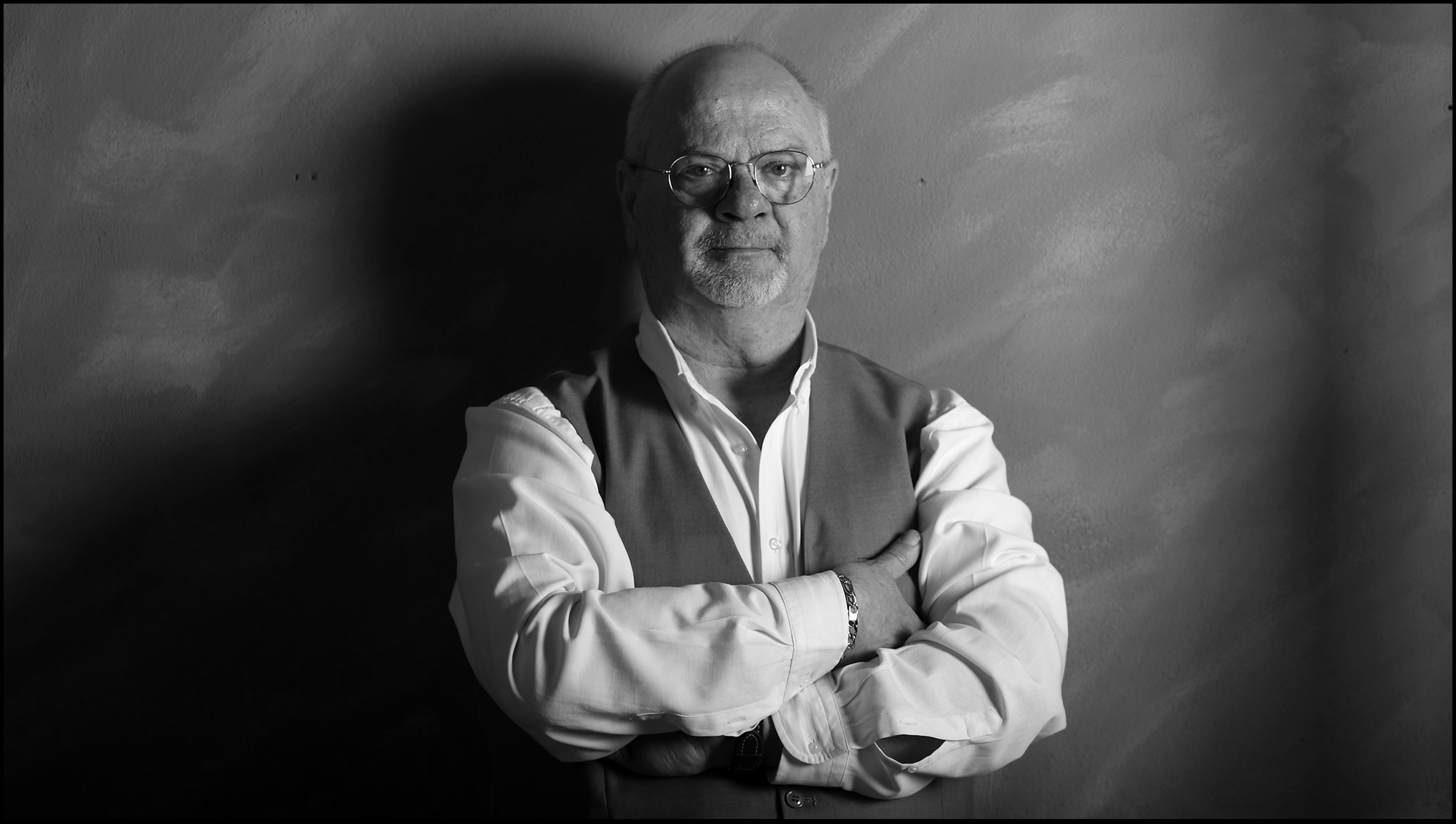
Biografía. / Biography.
Paco Parejo Santiago nació en Sevilla. En realidad, su nombre es Francisco José, pero la gente del teatro comenzó a llamarle Paco y, como no a él no le pareció mal, pues... Es autor teatral; es decir, dramaturgo. Comenzó a escribir teatro a los diez años. Su primera obra se tituló "La Naturaleza". En ella, curiosamente, no existían personajes humanos, sólo seres fantásticos, animales y plantas; incluso el aplauso final -que también lo consideró- era representado por un fenómeno atmosférico: la lluvia. De este modo, pensó, el patio de butacas se dedicaría a admirar en silencio. El autor hubiese dado cualquier cosa por conservar aquellos papeles. A su mamá no le gustaba que dejase por medio ni juguetes ni otras cosas prescindibles. Gracias a su padre, dispuso de una magnífica biblioteca. En ella encontró "El concierto de San Ovidio", de Antonio Buero Vallejo. Según declara, durante su infancia y juventud fue muy feliz jugando al fútbol, escribiendo y pintando. Avatares de la vida, le obligaron a salir de España. Trabajó en muy diferentes oficios; estudió dramaturgia y dirección de escena en Sídney. Años después, volvió a España. Poco después de su regreso, sufrió un grave accidente que le mantuvo inactivo durante varios años. En 2020 retomó la escritura dramática. Desde entonces, su entusiasmo por la vida y el teatro se ha renovado absolutamente. Prueba de ello es el haberse convertido en uno de los autores más prolíficos de la escena española.
Paco Parejo Santiago was born in Seville. His real name is Francisco José, but people in the theatre world started calling him Paco and, since he didn't mind, well... Paco he became. He is a playwright — that is, a dramatist. He began writing plays at the age of ten. His first play was entitled La Naturaleza. Curiously, it featured no human characters, only fantastical beings, animals and plants. Even the final applause — which he had thought of, too — was represented by a natural phenomenon: rain. That way, he reasoned, the audience in the stalls would remain silently absorbed in admiration. The author would have given anything to have kept those pages. His mother didn't like him leaving toys or other unnecessary things lying around. Thanks to his father, he had access to a magnificent library. There, he discovered El concierto de San Ovidio, by Antonio Buero Vallejo. As he recalls, he was very happy throughout his childhood and youth, playing football, writing and painting. The twists and turns of life forced him to leave Spain. He worked in a wide variety of jobs and studied playwriting and stage direction in Sydney. Years later, he returned to Spain. Not long after his return, he suffered a serious accident that kept him inactive for several years. In 2020, he returned to playwriting. Since then, his enthusiasm for life and theatre has been completely rekindled. Proof of this is the fact that he has become one of the most prolific playwrights on the Spanish theatre scene.
Escritura. / Style.
«Después de jugar un partido de fútbol, y mientras llegaba la hora del baño, me encerraba en mi cuarto —aquel lugar realmente propio, repleto de sueños y aventuras— y me ponía a escribir o a pintar, a "lo mío", a mis pasiones. En el transcurso de la infancia a la juventud, ambas actividades se convirtieron en algo necesario para mi desarrollo como persona. A los diez u once años, yo ignoraba qué estaba ocurriendo. Pero sabía que, fuese lo que fuese, era importante para mí. Al poco descubrí que un chico de mi edad, además de divertirse con los amigos, podía disfrutar de un tiempo y un lugar íntimos. A los 25 años, ya en Sidney, comencé a formarme en dramaturgia, dirección escénica, actuación y teatro técnico. Aprendí a adaptar textos clásicos, a analizar la narrativa y el estilo de autores de todas las épocas. Pero fue la tarea de descubrir los símbolos dentro de un texto y fijar su significado en la obra lo que realmente me fascinó. Y esto fue así porque me descubrí a mí mismo, mi propia dramaturgia que, sin haberla valorado entonces, era puro símbolo. A la vez que los cursos avanzaban y aprendía las intenciones de muchos autores, más me reafirmaba en mi estilo, en el que decidí incluir la técnica dramatúrgica conocida como «realismo simbólico». Y así continúa siendo hoy. Allí, en Sídney, descubrí un sinfín de posibilidades narrativas y estructurales, pero ninguna me servía como la propia para expresar lo que necesitaba decir al público.» (Paco Parejo Santiago).
«After playing a football match, and while waiting for bath time, I would shut myself away in my room — a place that was truly my own, filled with dreams and adventures — and set about writing or painting, doing “my own thing”, pursuing my passions. As I moved from childhood into adolescence, both activities became essential to my development as a person. At ten or eleven, I had no idea what was happening to me. But I knew that, whatever it was, it mattered to me. Before long, I discovered that a boy my age could enjoy not only having fun with friends, but also spending time alone in a space of his own. At the age of 25, while living in Sydney, I began studying playwriting, stage direction, acting and technical theatre. I learned to adapt classical texts and analyse the narrative and style of authors from all periods. But what truly fascinated me was the task of uncovering the symbols within a text and establishing their meaning in the play. This was because I discovered myself in the process — my own dramaturgy, which, without my realising it at the time, was pure symbolism. As the courses progressed and I learned about the intentions of so many authors, I became increasingly confident in my own style, which I decided to develop by incorporating the dramaturgical technique known as “symbolic realism”. And that is still the case today. There, in Sydney, I discovered a wealth of narrative and structural possibilities, but none felt like the right one for expressing what I needed to convey to the audience.» (Paco Parejo Santiago).
Obras. / Plays.
-
2025. DON MIGUEL Y LA IA
-
Inédita
-
2025. SEÑOR MERRICK
-
Inédita
-
2024. PADRES, HIJOS Y DEMONIOS
-
Inédita
-
2024. TRÁNSITO
-
Inédita
-
2024. MUJER EN SILLA DE RUEDAS
-
Inédita
-
2023. EL INTRUSO (O LA EPIFANÍA DE LO INCIERTO)
-
Inédita
-
2023. EL SORDO Y SUS CAPRICHOS
-
Inédita
-
2023. MRS. WALKER Y SUS AMIGOS
-
Inédita
-
2022. EL POLÍTICO INGENUO
-
Inédita
-
2022. EL CASO DEL CHICO A
-
Microteatro
-
2021. LA VIUDA BLANCA Y NEGRA (DRAMA EN TRES ACTOS)
-
Éride Ediciones
-
2021. VIDA LABORAL
-
Inédita
-
2020. PANDÉMICOS
-
Inédita
-
Leyenda / Legend
-
Estreno / Premio / Beca / Publicación
Premiere / Award / Grant / Publication
Premiere / Award / Grant / Publication

