
Señor Merrick
Paco Parejo Santiago, 2025
sobre / about


Datos técnicos. / Technical details.
Duración
>60'
Duration
>60'
Personajes
5
Characters
5
Actrices
2
Actresses
2
Actores
3
Actors
3
Público
Adulto
Audience
Adult
Formato
Mediano
Format
Medium
Sinopsis. / Synopsis.
"Señor Merrick" es una poderosa relectura contemporánea de la vida de “El hombre elefante”, que traslada la historia de Joseph Merrick al siglo XXI sin perder un ápice de su dimensión trágica, simbólica y profundamente humana. El autor se sirve de elementos de realismo puro y del drama psicológico para construir una fábula sobre el trauma, la identidad y la mirada del otro. Joseph, joven recogedor de chatarra, vive encerrado en una imagen deformada de sí mismo que solo existe en su mente, producto del maltrato y el abandono. La relación con Elizabeth, una joven que logra ver lo que él no puede, abre un resquicio de luz que se convierte en motor emocional de la obra. Sin embargo, los fantasmas del pasado no permiten la redención sin sacrificio. La obra avanza con tensión sostenida hacia un final inevitable, donde el crimen aparece no como solución, sino como única vía de resistencia.
Señor Merrick is a powerful contemporary reimagining of the life of “The Elephant Man,” bringing the story of Joseph Merrick into the twenty-first century without losing any of its tragic, symbolic, and profoundly human dimension. The playwright draws on elements of pure realism and psychological drama to construct a fable about trauma, identity, and the gaze of the other. Joseph, a young scrap collector, lives trapped within a distorted image of himself that exists only in his mind, shaped by abuse and abandonment. His relationship with Elizabeth, a young woman who manages to see what he cannot, opens a glimmer of light that becomes the emotional driving force of the play. However, the ghosts of the past allow no redemption without sacrifice. The play builds with sustained tension towards an inevitable ending, in which crime emerges not as a solution, but as the only means of resistance.
Notas. / Notes on the piece.
Joseph Merrick en el siglo XXI nos lleva a considerar determinadas situaciones sociales en las que el ser humano se convierte, a los ojos de los otros, en algo extraño por diferente. ¿Quién no ha visto al “Señor Merrick” con su carro de chatarra cruzar la carretera? Todos, creo, lo hemos visto alguna vez. Joseph sólo se descubre la cara ante su amigo Poul. La única vez que Poul ha hablado de los abusos sufridos en la infancia ha sido con Joseph. Ambos se conocen desde muy pequeños. Elizabeth, una chica de 20 años, fue vecina de Joseph, cuando él aún vivía con su padre, su madrastra y hermanastros. Los sueños y los anhelos de los dos amigos tienen en común el afán por ser quienes no son. Cuando Joseph se mira al espejo este le devuelve la imagen de un monstruo. De adulto, Joseph nunca ha hablado con una mujer. Por motivos diferentes, Poul tampoco.
Joseph Merrick in the twenty-first century leads us to consider certain social situations in which human beings become, in the eyes of others, something strange simply because they are different. Who hasn’t seen “Mr. Merrick,” pushing his scrap-metal cart across the road? I believe we all have at some point. Joseph only shows his face to his friend Poul. The only time Poul has ever spoken about the abuse he suffered as a child was with Joseph. The two have known each other since they were very young. Elizabeth, a twenty-year-old woman, was Joseph’s neighbour when he was still living with his father, stepmother, and half-siblings. The dreams and desires of the two friends have one thing in common: their longing to be someone they are not. When Joseph looks in the mirror, it reflects the image of a monster. As an adult, Joseph has never spoken to a woman. For different reasons, neither has Poul.
Otros datos. / Other information.
Inédita
sobre / about


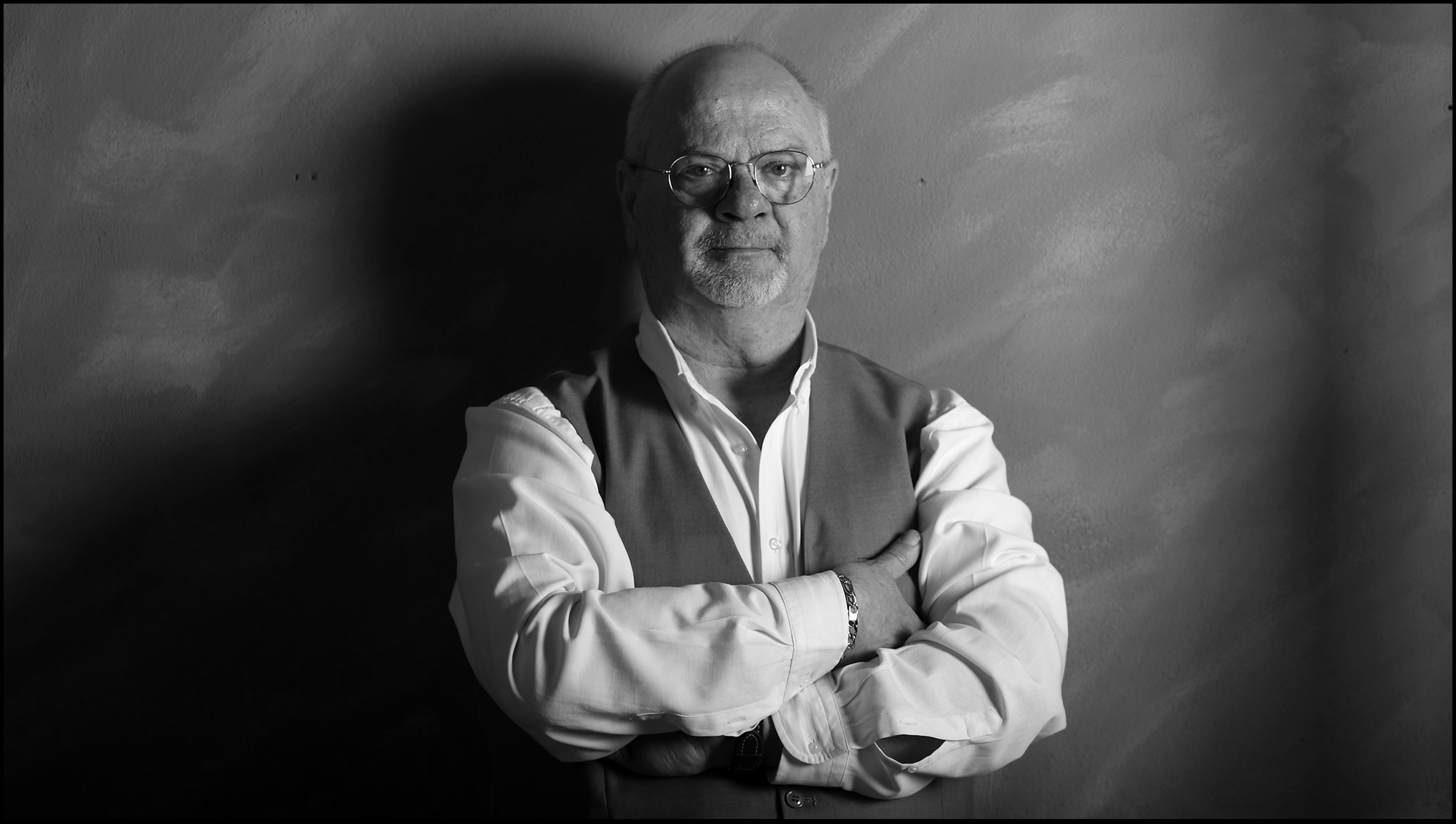
Biografía. / Biography.
Paco Parejo Santiago nació en Sevilla. En realidad, su nombre es Francisco José, pero la gente del teatro comenzó a llamarle Paco y, como no a él no le pareció mal, pues... Es autor teatral; es decir, dramaturgo. Comenzó a escribir teatro a los diez años. Su primera obra se tituló "La Naturaleza". En ella, curiosamente, no existían personajes humanos, sólo seres fantásticos, animales y plantas; incluso el aplauso final -que también lo consideró- era representado por un fenómeno atmosférico: la lluvia. De este modo, pensó, el patio de butacas se dedicaría a admirar en silencio. El autor hubiese dado cualquier cosa por conservar aquellos papeles. A su mamá no le gustaba que dejase por medio ni juguetes ni otras cosas prescindibles. Gracias a su padre, dispuso de una magnífica biblioteca. En ella encontró "El concierto de San Ovidio", de Antonio Buero Vallejo. Según declara, durante su infancia y juventud fue muy feliz jugando al fútbol, escribiendo y pintando. Avatares de la vida, le obligaron a salir de España. Trabajó en muy diferentes oficios; estudió dramaturgia y dirección de escena en Sídney. Años después, volvió a España. Poco después de su regreso, sufrió un grave accidente que le mantuvo inactivo durante varios años. En 2020 retomó la escritura dramática. Desde entonces, su entusiasmo por la vida y el teatro se ha renovado absolutamente. Prueba de ello es el haberse convertido en uno de los autores más prolíficos de la escena española.
Paco Parejo Santiago was born in Seville. His real name is Francisco José, but people in the theatre world started calling him Paco and, since he didn't mind, well... Paco he became. He is a playwright — that is, a dramatist. He began writing plays at the age of ten. His first play was entitled La Naturaleza. Curiously, it featured no human characters, only fantastical beings, animals and plants. Even the final applause — which he had thought of, too — was represented by a natural phenomenon: rain. That way, he reasoned, the audience in the stalls would remain silently absorbed in admiration. The author would have given anything to have kept those pages. His mother didn't like him leaving toys or other unnecessary things lying around. Thanks to his father, he had access to a magnificent library. There, he discovered El concierto de San Ovidio, by Antonio Buero Vallejo. As he recalls, he was very happy throughout his childhood and youth, playing football, writing and painting. The twists and turns of life forced him to leave Spain. He worked in a wide variety of jobs and studied playwriting and stage direction in Sydney. Years later, he returned to Spain. Not long after his return, he suffered a serious accident that kept him inactive for several years. In 2020, he returned to playwriting. Since then, his enthusiasm for life and theatre has been completely rekindled. Proof of this is the fact that he has become one of the most prolific playwrights on the Spanish theatre scene.
Escritura. / Style.
«Después de jugar un partido de fútbol, y mientras llegaba la hora del baño, me encerraba en mi cuarto —aquel lugar realmente propio, repleto de sueños y aventuras— y me ponía a escribir o a pintar, a "lo mío", a mis pasiones. En el transcurso de la infancia a la juventud, ambas actividades se convirtieron en algo necesario para mi desarrollo como persona. A los diez u once años, yo ignoraba qué estaba ocurriendo. Pero sabía que, fuese lo que fuese, era importante para mí. Al poco descubrí que un chico de mi edad, además de divertirse con los amigos, podía disfrutar de un tiempo y un lugar íntimos. A los 25 años, ya en Sidney, comencé a formarme en dramaturgia, dirección escénica, actuación y teatro técnico. Aprendí a adaptar textos clásicos, a analizar la narrativa y el estilo de autores de todas las épocas. Pero fue la tarea de descubrir los símbolos dentro de un texto y fijar su significado en la obra lo que realmente me fascinó. Y esto fue así porque me descubrí a mí mismo, mi propia dramaturgia que, sin haberla valorado entonces, era puro símbolo. A la vez que los cursos avanzaban y aprendía las intenciones de muchos autores, más me reafirmaba en mi estilo, en el que decidí incluir la técnica dramatúrgica conocida como «realismo simbólico». Y así continúa siendo hoy. Allí, en Sídney, descubrí un sinfín de posibilidades narrativas y estructurales, pero ninguna me servía como la propia para expresar lo que necesitaba decir al público.» (Paco Parejo Santiago).
«After playing a football match, and while waiting for bath time, I would shut myself away in my room — a place that was truly my own, filled with dreams and adventures — and set about writing or painting, doing “my own thing”, pursuing my passions. As I moved from childhood into adolescence, both activities became essential to my development as a person. At ten or eleven, I had no idea what was happening to me. But I knew that, whatever it was, it mattered to me. Before long, I discovered that a boy my age could enjoy not only having fun with friends, but also spending time alone in a space of his own. At the age of 25, while living in Sydney, I began studying playwriting, stage direction, acting and technical theatre. I learned to adapt classical texts and analyse the narrative and style of authors from all periods. But what truly fascinated me was the task of uncovering the symbols within a text and establishing their meaning in the play. This was because I discovered myself in the process — my own dramaturgy, which, without my realising it at the time, was pure symbolism. As the courses progressed and I learned about the intentions of so many authors, I became increasingly confident in my own style, which I decided to develop by incorporating the dramaturgical technique known as “symbolic realism”. And that is still the case today. There, in Sydney, I discovered a wealth of narrative and structural possibilities, but none felt like the right one for expressing what I needed to convey to the audience.» (Paco Parejo Santiago).
Obras. / Plays.
-
2025. DON MIGUEL Y LA IA
-
Inédita
-
2025. SEÑOR MERRICK
-
Inédita
-
2024. PADRES, HIJOS Y DEMONIOS
-
Inédita
-
2024. TRÁNSITO
-
Inédita
-
2024. MUJER EN SILLA DE RUEDAS
-
Inédita
-
2023. EL INTRUSO (O LA EPIFANÍA DE LO INCIERTO)
-
Inédita
-
2023. EL SORDO Y SUS CAPRICHOS
-
Inédita
-
2023. MRS. WALKER Y SUS AMIGOS
-
Inédita
-
2022. EL POLÍTICO INGENUO
-
Inédita
-
2022. EL CASO DEL CHICO A
-
Microteatro
-
2021. LA VIUDA BLANCA Y NEGRA (DRAMA EN TRES ACTOS)
-
Éride Ediciones
-
2021. VIDA LABORAL
-
Inédita
-
2020. PANDÉMICOS
-
Inédita
-
Leyenda / Legend
-
Estreno / Premio / Beca / Publicación
Premiere / Award / Grant / Publication
Premiere / Award / Grant / Publication

