
Fátima Delgado
O Barco de Valdeorras, 1981
sobre / about


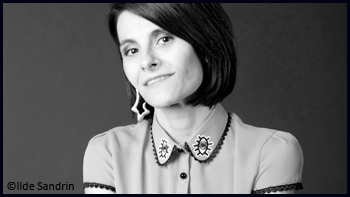

Biografía. / Biography.
Dramaturga, poeta, actriz. Licenciada en Filología Inglesa y Máster en Lingüística. Fue profesora de instituto durante doce años. Finalista en la Residencia Dramática del CDN 2020/21. Empieza a formarse en el Aula de Teatro (USC) y es cofundadora de la compañía As Fillas de Lilith, adaptando al gallego Las lágrimas amargas de Petra Von Kant de Fassbinder. En Madrid estudia interpretación en las Escuelas Asura y Metrópolis. Amplía su formación como actriz en talleres con grandes maestros y trabaja en varias compañías de teatro y proyectos cinematográficos. Junto a la actriz Cynthia Pagotto funda Meninas Teatro y escribe su primera obra: Androsex (2013). El éxito de ésta la empuja a seguir escribiendo teatro, siendo prácticamente autodidacta. 2017 es un año clave: en el Programa de Mentorías de la LMPT, gracias a su mentora Saida Santana, se centra en la escritura teatral y junto a Carlos Tuñón (taller intensivo de dirección) amplía su visión escénica. Con su compañía La Méduse, fundada junto a Tatiana Carel, es co-dramaturga de las obras Mi verano en burkini (2020) y Tsunami (2018).Tiene cuatro libros de poesía en gallego y forma parte del Prostíbulo poético. En 2020 presenta Ouveos/Aullidos, publicado por la editorial Seda de Biso y en 2018 Ninfopoética, publicado por la Editora Urutau. Adapta al teatro ambos poemarios a modo de obras de poesía escénica. Gana varios premios literarios y participa en festivales de poesía y recitales en Galicia y Madrid.
Playwright, poet, and actress. She holds a degree in English Philology and a Master’s in Linguistics. She worked as a secondary school teacher for twelve years. She was a finalist in the CDN Dramatic Residency 2020/21. She began her training at the Aula de Teatro (USC) and is co-founder of the company As Fillas de Lilith, adapting into Galician The Bitter Tears of Petra von Kant by Fassbinder. In Madrid, she studied acting at the Asura and Metrópolis schools. She furthered her training as an actress through workshops with renowned masters and has worked with various theatre companies and film projects. Together with actress Cynthia Pagotto, she founded Meninas Teatro and wrote her first play, Androsex (2013). Its success encouraged her to continue writing theatre, largely self-taught. 2017 was a key year: through the LMPT Mentorship Programme, and thanks to her mentor Saida Santana, she focused on playwriting, while an intensive directing workshop with Carlos Tuñón expanded her stage perspective. With her company La Méduse, founded alongside Tatiana Carel, she is co-dramaturg of Mi verano en burkini (2020) and Tsunami (2018). She has published four poetry books in Galician and is part of the Prostíbulo Poético. In 2020 she presented Ouveos/Aullidos, published by Seda de Biso, and in 2018 Ninfopoética, published by Editora Urutau. She has adapted both collections for the stage as works of performance poetry. She has received several literary awards and has participated in poetry festivals and readings in Galicia and Madrid.
Escritura. / Style.
«Escribo poesía desde muy joven y soy dramaturga accidental. Poco a poco, la poesía cedió espacio al teatro, dónde puse primero el cuerpo y después la palabra. Mis primeras obras hablan de un futuro distópico, en clave de comedia, supongo que para desdramatizar, pero esconden tras sí temas como la soledad, la incomunicación y la deshumanización. Tardé mucho en quitarme esa venda invisible que me ponía cuando escribía teatro: la dramaturga apartaba a un lado a la poeta y viceversa. Sin embargo, mis últimas obras fusionan ambas disciplinas con el movimiento y la danza, en ellas los personajes principales son mujeres y el espacio sonoro es de vital importancia. Como creadora vivo en un proceso de continuo aprendizaje, no me conformo con ser un mero canal de transmisión y busco nuevas vías para evolucionar. Me siento en la responsabilidad de plasmar la realidad de las que no pudieron, me gusta generar debate y huir del adoctrinamiento. Me preocupa lo social y adopto el lema de “Lo personal es político”. En mi creación artística quiero acercarme a nuevos lenguajes teatrales y experimentar con la dramaturgia visual. Me siento muy cómoda en la poesía escénica y la performance. En mi cosmovisión el folclore gallego se convierte en ritual. Al igual que en la poesía, en el teatro abogo por una vuelta al origen. En cada proyecto me surgen muchas dudas, pero también la necesidad de investigar lugares desconocidos, la atracción por el riesgo y el atrevimiento. Eso para mí es el teatro.» (Fátima Delgado).
«I have been writing poetry since I was very young, and I am an accidental playwright. Little by little, poetry gave way to theatre, where I first placed the body and then the word. My early works speak of a dystopian future, in a comic key, I suppose to defuse the drama, but beneath them lie themes such as loneliness, lack of communication and dehumanisation. It took me a long time to remove that invisible blindfold I wore when writing theatre: the playwright would push the poet aside, and vice versa. However, my latest works fuse both disciplines with movement and dance; in them, the main characters are women and the soundscape is of vital importance. As a creator, I live in a process of continuous learning; I am not satisfied with being a mere channel of transmission and I seek new ways to evolve. I feel a responsibility to give shape to the reality of those who could not, I like to generate debate and avoid indoctrination. I am concerned with the social, and I embrace the idea that ‘the personal is political.’ In my artistic work I aim to approach new theatrical languages and to experiment with visual dramaturgy. I feel very comfortable in performance poetry and live art. In my worldview, Galician folklore becomes ritual. As in poetry, in theatre I advocate a return to origins. With every project, many doubts arise, but so does the need to explore unknown territories, an attraction to risk and boldness. That, for me, is theatre.» (Fátima Delgado).
Obras. / Plays.
-
2023. RUN BABY RUN
-
Salón Teatro, Santiago de Compostela, 2023
Ayuda a la creación y desarrollo de las artes escénicas de la Comunidad de Madrid 2018
Editorial Galaxia
-
2020. AURORA Y YO
-
Inédita
-
2020. MI VERANO EN BURKINI
-
Coautoría con Tatiana Carel
-
2019. NINFOPOÉTICA, MONÓLOGO POÉTICO POSTADOLESCENTE
-
Festival SilFest Valdeorras, O Barco de Valdeorras, Ourense
Ninfopoética, editorial Urutau
-
2018. TSUNAMI
-
Coautoría con Tatiana Carel
El Umbral de Primavera, Madrid + Teatro Casa del Reloj, Festival Noches del Ramadán
-
2017. LA GALLINITA CIEGA
-
Inédita
-
2016. AVÓN LLAMA A TU PUERTA
-
Coautoría con Víctor Sánchez Alonso
El Esconditeatro, Madrid
-
2015. NO SIN MI LIBRO
-
La Escalera de Jacob, Madrid
-
2013. ANDROSEX, UNA COMEDIA CIBERNÉTICA
-
Sala Triángulo, Madrid
-
Leyenda / Legend
-
Estreno / Premio / Beca / Publicación
Premiere / Award / Grant / Publication
Ayuda a la creación y desarrollo de las artes escénicas de la Comunidad de Madrid 2018
Editorial Galaxia
Ninfopoética, editorial Urutau
El Umbral de Primavera, Madrid + Teatro Casa del Reloj, Festival Noches del Ramadán
El Esconditeatro, Madrid
Premiere / Award / Grant / Publication
sus obras en / their works on

-
 2013 >60' 3 1
ANDROSEX, UNA COMEDIA CIBERNÉTICA
Fátima Delgado -
 2015 <30' 1 1
NO SIN MI LIBRO
Fátima Delgado -
2016 <30' 2 0
AVÓN LLAMA A TU PUERTA
Fátima Delgado y Víctor Sánchez Alonso -
 2018 >60' 6-10 0
TSUNAMI
Fátima Delgado y Tatiana Carel -
2019 30'-60' 1 0
NINFOPOÉTICA, MONÓLOGO POÉTICO POSTADOLESCENTE
Fátima Delgado -
 2023 >60' 3 1
RUN BABY RUN
Fátima Delgado
