
La tribu
Roberta Pasquinucci, 2019
sobre / about


Datos técnicos. / Technical details.
Duración
>60'
Duration
>60'
Personajes
6-10
Characters
6-10
Actrices
5
Actresses
5
Actores
1
Actors
1
Público
Adulto
Audience
Adult
Formato
Mediano
Format
Medium
Sinopsis. / Synopsis.
Una mujer muere. Se suicida. ¿Cuál es la reacción de su entorno más cercano? ¿Qué desencadena este acontecimiento entre sus amigas? Cuatro mujeres y un hombre lidian con estos tiempos cambiantes, en los que nada es como era y nadie sabe exactamente hacia donde va o cómo hacerlo mejor. Las frustraciones, las expectativas, los deseos y los pensamientos íntimos de un grupo de gente corriente, hoy, delante de una muerte que no tiene ninguna causa aparente. La tribu es una reflexión sobre la vida, desde el punto de vista existencial, social y de género. El objetivo de este texto es sondear el alma y la mente de cuatro mujeres amigas que bien podrían ser nuestras vecinas de casa. O nosotras mismas. Como dice uno de los personajes “no he sido violada, no soy madre, no he estado en la guerra”, pero aún así tengo derecho a contar mi historia. Hay muchas “vidas invisibles” a su alrededor, mucho sufrimiento desapercibido, no considerado digno de atención. Tal vez porque es “demasiado normal”, tal vez porque asumen que no es bastante importante o tal vez porque dan por descontado que por ser mujer hay que sufrir. Y que ese sufrimiento si es interno, no se ve y no llama demasiado la atención, tampoco es tan grave. Razón por la cual se sienten solas y al mismo tiempo, al asumir esa percepción de su dolor, tienden a no pedir ayuda ya que ni siquiera piensan merecérsela. Y a veces reducen autónomamente su derecho a ser comprendidas, amadas y consideradas.
A woman dies. She takes her own life. What is the reaction of those closest to her? What does this event unleash among her friends? Four women and one man grapple with these changing times, in which nothing is as it once was and no one knows exactly where they are heading or how to do things better. The frustrations, expectations, desires, and intimate thoughts of a group of ordinary people today, faced with a death that seems to have no apparent cause. La tribu is a reflection on life from an existential, social, and gender-based perspective. The aim of this text is to probe the soul and mind of four female friends who could very well be our neighbors. Or ourselves. As one of the characters says, “I haven’t been raped, I’m not a mother, I haven’t been to war,” but even so, I have the right to tell my story. There are many “invisible lives” around them, much unnoticed suffering that is not considered worthy of attention. Perhaps because it is “too normal,” perhaps because it is assumed not to be important enough, or perhaps because it is taken for granted that being a woman means having to suffer. And that if this suffering is internal, unseen, and does not draw much attention, then it is not so serious. As a result, they feel alone and, at the same time, by internalizing this perception of their pain, they tend not to ask for help, since they do not even believe they deserve it. And sometimes they autonomously diminish their own right to be understood, loved, and taken into consideration.
Notas. / Notes on the piece.
La estructura dramatúrgica de “La Tribu” está compuesta por monólogos y diálogos aparentemente fuera del tiempo y del espacio. Se trata de una “narraturgia”, salpicada por momentos oníricos y otros muy concretos, reales y enérgicos, que, aunque en un principio pueda parecer compuesta por distintas historias, éstas finalmente confluyen en una única trama. Hay también música y movimiento escénico acorde con lo que sienten y transitan los personajes.
The dramaturgical structure of “La Tribu” is composed of monologues and dialogues that seem to exist outside of time and space. It is a form of “narraturgy,” interspersed with dreamlike moments and others that are very concrete, real, and energetic, which, although at first may appear to be made up of different stories, ultimately converge into a single plot. There is also music and stage movement aligned with what the characters feel and go through.
sobre / about


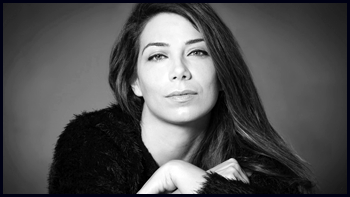

Biografía. / Biography.
Empezó subiéndose a las tablas con 15 años y adaptando y dirigiendo su primera obra de teatro con 23, y ha sido fundadora de tres compañías de teatro (“Periféricos Peregrinos”, “Trama Teatro” y “Nigredo”), produciendo, dirigiendo y actuando en sus espectáculos. Como actriz, se formó en Barcelona en el Estudi Nancy Tuñón, se graduó en Técnica Meisner en el programa de la Neighborhood Playhouse, pero sobre todo trabajó muchos años en la compañía “La Invenciò” de Josep Pere Peirò, fundamental en su visión de un teatro atrevido y comprometido. Sus primeras incursiones en el mundo de la dramaturgia las hizo siguiendo los pasos del maestro José Sanchis Sinisterra, del que admira la amplitud de visión y las ilimitadas búsquedas de experimentación dramatúrgica. Roberta habla cinco idiomas y ha adaptado “El hombre de mis sueños” de Francesca Angeli (italiano–español), “Sunday on the rocks” de Theresa Rebeck (inglés–español), “Dignidad”, “El Plan” y “El cíclope y otras rarezas de amor” de Ignasi Vidal (español–italiano) y “El Hambre” de Renato Gabrielli (italiano–español).
She began performing on stage at the age of 15 and adapted and directed her first play at 23. She has been a founder of three theatre companies (Periféricos Peregrinos, Trama Teatro and Nigredo), producing, directing and acting in their productions. As an actress, she trained in Barcelona at the Nancy Tuñón Studio, graduated in the Meisner Technique at the Neighborhood Playhouse program, and above all worked for many years with Josep Pere Peiró’s company La Invenció, which was fundamental in shaping her vision of a bold and socially engaged theatre. Her first forays into dramaturgy followed in the footsteps of José Sanchis Sinisterra, whose breadth of vision and limitless pursuit of dramaturgical experimentation she deeply admires. Roberta speaks five languages and has adapted El hombre de mis sueños by Francesca Angeli (Italian–Spanish), Sunday on the Rocks by Theresa Rebeck (English–Spanish), Dignidad, El Plan and El cíclope y otras rarezas de amor by Ignasi Vidal (Spanish–Italian), and El Hambre by Renato Gabrielli (Italian–Spanish).
Escritura. / Style.
Roberta trabaja la dramaturgia experimental y performativa, donde mezcla distintas disciplinas artísticas y la palabra es a la vez comunicativa y parte de la experiencia estética. Aspira a un uso expresionista de la palabra y a poner en evidencia las dicotomías de la existencia que se refleja en el comportamiento social.
Roberta works in experimental and performative dramaturgy, blending different artistic disciplines, where language is both communicative and an integral part of the aesthetic experience. She aspires to an expressionist use of language and to exposing the dichotomies of existence as reflected in social behavior.
Obras. / Plays.
-
2019. LA TRIBU
-
Inédita
-
2015. VISCERAL
-
Inédita
-
2008. EL HAMBRE
-
Teatro i, Milano, Italia, 2008 + Teatro Oran Mor, Glasgow, Inglaterra, 2008
Premio Milano, 2009, Mejor nuevo texto temporada 2008/2009
-
Leyenda / Legend
-
Estreno / Premio / Beca / Publicación
Premiere / Award / Grant / Publication
Premio Milano, 2009, Mejor nuevo texto temporada 2008/2009
Premiere / Award / Grant / Publication


