
Visceral
Roberta Pasquinucci, 2015
sobre / about


Datos técnicos. / Technical details.
Duración
>60'
Duration
>60'
Personajes
5
Characters
5
Actrices
5
Actresses
5
Actores
0
Actors
0
Público
Adulto
Audience
Adult
Formato
Mediano
Format
Medium
Sinopsis. / Synopsis.
Visceral propone un recorrido vital que empieza por un estado natural instintivo y feliz, recuerdo del hombre bueno de Rousseau, que luego pierde su camino condicionado por la institución familiar, la sociedad y su propia ceguera. El sujeto pierde su condición de pureza primigenia y busca recuperar o directamente encontrar su camino, observando su relación con las raíces, su psique y su vida sentimental. Se trata de un estudio íntimo sobre el proceso de maduración del ser a través de los entornos sistémicos en los que se va desarrollando.
Visceral proposes a vital journey that begins in a natural, instinctive, and happy state—a reminder of Rousseau’s notion of the inherently good human being—which later loses its way, shaped by the family institution, society, and its own blindness. The subject loses this primordial purity and seeks to recover it, or simply to find their path for the first time, by observing their relationship with their roots, their psyche, and their emotional life. It is an intimate study of the process of maturation of the self through the systemic environments in which it develops.
sobre / about


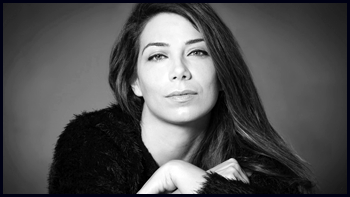

Biografía. / Biography.
Empezó subiéndose a las tablas con 15 años y adaptando y dirigiendo su primera obra de teatro con 23, y ha sido fundadora de tres compañías de teatro (“Periféricos Peregrinos”, “Trama Teatro” y “Nigredo”), produciendo, dirigiendo y actuando en sus espectáculos. Como actriz, se formó en Barcelona en el Estudi Nancy Tuñón, se graduó en Técnica Meisner en el programa de la Neighborhood Playhouse, pero sobre todo trabajó muchos años en la compañía “La Invenciò” de Josep Pere Peirò, fundamental en su visión de un teatro atrevido y comprometido. Sus primeras incursiones en el mundo de la dramaturgia las hizo siguiendo los pasos del maestro José Sanchis Sinisterra, del que admira la amplitud de visión y las ilimitadas búsquedas de experimentación dramatúrgica. Roberta habla cinco idiomas y ha adaptado “El hombre de mis sueños” de Francesca Angeli (italiano–español), “Sunday on the rocks” de Theresa Rebeck (inglés–español), “Dignidad”, “El Plan” y “El cíclope y otras rarezas de amor” de Ignasi Vidal (español–italiano) y “El Hambre” de Renato Gabrielli (italiano–español).
She began performing on stage at the age of 15 and adapted and directed her first play at 23. She has been a founder of three theatre companies (Periféricos Peregrinos, Trama Teatro and Nigredo), producing, directing and acting in their productions. As an actress, she trained in Barcelona at the Nancy Tuñón Studio, graduated in the Meisner Technique at the Neighborhood Playhouse program, and above all worked for many years with Josep Pere Peiró’s company La Invenció, which was fundamental in shaping her vision of a bold and socially engaged theatre. Her first forays into dramaturgy followed in the footsteps of José Sanchis Sinisterra, whose breadth of vision and limitless pursuit of dramaturgical experimentation she deeply admires. Roberta speaks five languages and has adapted El hombre de mis sueños by Francesca Angeli (Italian–Spanish), Sunday on the Rocks by Theresa Rebeck (English–Spanish), Dignidad, El Plan and El cíclope y otras rarezas de amor by Ignasi Vidal (Spanish–Italian), and El Hambre by Renato Gabrielli (Italian–Spanish).
Escritura. / Style.
Roberta trabaja la dramaturgia experimental y performativa, donde mezcla distintas disciplinas artísticas y la palabra es a la vez comunicativa y parte de la experiencia estética. Aspira a un uso expresionista de la palabra y a poner en evidencia las dicotomías de la existencia que se refleja en el comportamiento social.
Roberta works in experimental and performative dramaturgy, blending different artistic disciplines, where language is both communicative and an integral part of the aesthetic experience. She aspires to an expressionist use of language and to exposing the dichotomies of existence as reflected in social behavior.
Obras. / Plays.
-
2019. LA TRIBU
-
Inédita
-
2015. VISCERAL
-
Inédita
-
2008. EL HAMBRE
-
Teatro i, Milano, Italia, 2008 + Teatro Oran Mor, Glasgow, Inglaterra, 2008
Premio Milano, 2009, Mejor nuevo texto temporada 2008/2009
-
Leyenda / Legend
-
Estreno / Premio / Beca / Publicación
Premiere / Award / Grant / Publication
Premio Milano, 2009, Mejor nuevo texto temporada 2008/2009
Premiere / Award / Grant / Publication


