
Demolición
David Barreiro, 2025
sobre / about

Datos técnicos. / Technical details.
Duración
>60'
Duration
>60'
Personajes
3
Characters
3
Actrices
1
Actresses
1
Actores
2
Actors
2
Público
Adulto
Audience
Adult
Formato
Mediano
Format
Medium
Sinopsis. / Synopsis.
Dos actores y una actriz, miembros de una compañía de teatro independiente, se preparan para una actuación. Mientras montan ellos mismos la escenografía, hablan de sus sueños y esperanzas, pero sobre todo del derrumbe de las expectativas. Su amor por el teatro, su vocación, se ve lastrada por una realidad que los condena. Al tiempo, el autor de la obra nos habla sobre ellos, sobre lo que no dicen, sobre lo que ocultan aunque, sin que él no lo sepa, ellos también tienen un plan que va más allá de lo que él puede predecir.
Two actors and an actress, members of an independent theatre company, prepare for a performance. As they assemble the set themselves, they speak about their dreams and hopes, but above all about the collapse of expectations. Their love of theatre, their vocation, is weighed down by a reality that condemns them. At the same time, the playwright speaks to us about them — about what they do not say, about what they conceal — although, unbeknownst to him, they too have a plan that goes far beyond anything he can foresee.
Notas. / Notes on the piece.
Muchas veces me he preguntado qué empuja a una persona para nadar siempre contra la corriente de la propia realidad. Hablo de escritores, directores, actrices y actores, cómicos, artistas en general que viven entregados a una oficio, a una vocación que en muchas ocasiones no les devuelve nada de lo que han dado. A partir de ahí surge la idea de Demolición, una obra que transcurre justo antes del inicio de una función, mientras los actores se visten, montan la escenografía, hablan de sus cosas. En ese instante en que, como tantas otras veces, dudan de si realmente merece la pena. También el propio autor reflexiona sobre ello y también sobre qué lleva a la gente a olvidarse del mundo y encerrarse en el teatro. Es, ante todo, eso, un canto de amor al teatro.
I have often wondered what drives a person to keep swimming against the current of their own reality. I am speaking of writers, directors, actresses and actors, comedians, artists in general who devote themselves entirely to a craft, to a vocation that, more often than not, gives them nothing in return for all they have given. From this idea emerged Demolición, a play that takes place just before the beginning of a performance, while the actors get dressed, assemble the set and talk about their lives. In that moment, as on so many other occasions, they question whether any of it is truly worth it. The playwright himself also reflects on this, and on what compels people to forget the world and shut themselves away inside the theatre. Above all, it is a love song to theatre.
Otros datos. / Other information.
II Premio de Teatro Ciudad de Requena 2026
sobre / about


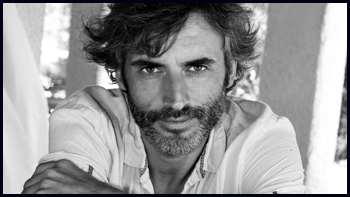
Biografía. / Biography.
«Comencé mi carrera como dramaturgo en el año 2012. Ese año escribí mi primer texto dramático que tuve la fortuna de que fuera premiado y publicado. Desde entonces, he seguido escribiendo teatro con la asiduidad de las peores y mejores adicciones. Debido a que mi formación era en narrativa y guion, durante tiempo tuve la sensación de que cuando escribía teatro estaba adentrándome en una casa a la que no había sido invitado. Solo el paso de los años, las publicaciones y representaciones han conseguido mitigar, que no aplacar, esta sensación de impostura. Sigo trabajando en ello.» (David Barreiro)
«I began my career as a playwright in 2012. That year I wrote my first dramatic text, which I was fortunate enough to see awarded and published. Since then, I have continued writing theatre with the persistence of both the best and the worst addictions. Because my background was in narrative writing and screenwriting, for a long time I felt that, whenever I wrote theatre, I was entering a house to which I had not been invited. Only the passing of years, along with publications and productions, has managed to soften — though not entirely silence — this feeling of imposture. I am still working on it.» (David Barreiro)
Escritura. / Style.
«En mis obras suele haber exactamente lo contrario de lo que me propongo. Es como si una fuerza primigenia que emanara del propio texto lo llevara allá por donde desea al margen de mis intenciones. He escrito dramas disfrazados de comedia y comedias que solo se sustentaban en el andamiaje del drama. En mis obras más críticas hay una aparente sensación de superficialidad y en los textos más livianos el lector o espectador descubre al final que el lodo le llega por las rodillas. Esa tensión, esa contradicción, está en mi dramaturgia, la sensación perenne de tratar de escapar de mis obsesiones, de tratar de borrar mis propias huellas en cada nueva obra y terminar, casi siempre, en el mismo lugar en el que comencé porque acabo haciendo exactamente lo contrario de lo que me propongo... como en este texto.» (David Barreiro)
«My plays often contain exactly the opposite of what I originally intend. It is as though a primordial force emanating from the text itself carries it wherever it wishes, regardless of my intentions. I have written dramas disguised as comedies and comedies sustained only by the scaffolding of drama. In my most critical works there is an apparent sense of superficiality, while in the lightest texts the reader or spectator eventually discovers that the mud reaches up to their knees. That tension, that contradiction, lies at the heart of my dramaturgy: the constant sensation of trying to escape my obsessions, of trying to erase my own traces in each new work, only to end up, almost always, in the very same place where I began — because I end up doing exactly the opposite of what I set out to do… as in this text.» (David Barreiro)
Obras. / Plays.
-
2025. DEMOLICIÓN
-
II Premio de Teatro Ciudad de Requena 2026
-
2024. UNA VISITA INESPERADA
-
Inédita
-
2022. LA CARTA
-
Inédita
-
2021. LA OPORTUNIDAD
-
Inédita
-
2021. EL FAVOR
-
Inédita
-
2021. MADRID
-
Inédita
-
2020. HELSINKI
-
Teatros Luchana, Madrid
-
2020. LA POSIBILIDAD
-
Inédita
-
2020. DUELO
-
Inédita
-
2019. EL INQUILINO PERFECTO
-
Premio Animat.Sur de Textos Teatrales
-
2019. EL VALLE INQUIETANTE
-
Inédita
-
2019. LA CORRIENTE
-
Selección Nuevas Dramaturgias 2019
-
2019. ROMA
-
Premio de Teatro Ciudad de Requena, 2020
Ayuntamiento de Requena, 2020
-
2019. *FIN DE LA CITA
-
Inédita
-
2018. CAIMANES
-
Teatro López de Ayala, Badajoz, 2018
-
2018. MORALES
-
Inédita
-
2018. LA SEÑORA DAVENPORT
-
Inédita
-
2018. LA HERENCIA
-
Teatros Luchana, Madrid
Premio de Teatro Ciudad de Castellón 2018 + Selección Cimientos IATI Theater New York, 2019
Ayuntamiento de Castellón
-
2016. NORA
-
Festival de Teatro Amateur de Extremadura, 2017
Premio Raúl Moreno FATEX de Textos Teatrales, 2016
Junta de Extremadura
-
2015. AFTERWORK
-
Teatro Nueve Norte, Madrid
Premio Castelló a Escena, 2015
Ayuntamiento de Castellón
-
2015. LA CLÁUSULA
-
Bestia Audax
-
2014. EL CANDIDATO
-
Teatro Nueve Norte, Madrid, 2018
Premio Agustín González de Textos Teatrales, 2014
-
2012. PERCEBES
-
Premio Asturias Joven de Textos Teatrales, 2012
Impronta Editorial, 2013
-
Leyenda / Legend
-
Estreno / Premio / Beca / Publicación
Premiere / Award / Grant / Publication
Ayuntamiento de Requena, 2020
Premio de Teatro Ciudad de Castellón 2018 + Selección Cimientos IATI Theater New York, 2019
Ayuntamiento de Castellón
Premio Raúl Moreno FATEX de Textos Teatrales, 2016
Junta de Extremadura
Premio Castelló a Escena, 2015
Ayuntamiento de Castellón
Premio Agustín González de Textos Teatrales, 2014
Impronta Editorial, 2013
Premiere / Award / Grant / Publication
sus obras en / their works on

-
 2025 >60' 1 2
DEMOLICIÓN
David Barreiro -
 2024 >60' 1 3
UNA VISITA INESPERADA
David Barreiro -
 2022 >60' 0 1
LA CARTA
David Barreiro -
 2021 >60' 2 2
LA OPORTUNIDAD
David Barreiro -
 2021 >60' 2 2
EL FAVOR
David Barreiro -
 2021 >60' 1 1
MADRID
David Barreiro -
 2020 >60' 1 1
HELSINKI
David Barreiro -
2019 >60' 2 2
EL VALLE INQUIETANTE
David Barreiro -
 2020 >60' 1 1
LA POSIBILIDAD
David Barreiro -
2020 >60' 1 3
DUELO
David Barreiro -
 2019 >60' 2 3
EL INQUILINO PERFECTO
David Barreiro -
2019 >60' 1 2
LA CORRIENTE
David Barreiro -
 2019 >60' 1 1
ROMA
David Barreiro -
2019 >60' 1 1
*FIN DE LA CITA
David Barreiro -
2018 >60' 1 2
MORALES
David Barreiro -
 2018 >60' 2 1
LA SEÑORA DAVENPORT
David Barreiro -
2018 >60' 1 3
LA HERENCIA
David Barreiro -
 2018 >60' 1 1
NORA
David Barreiro -
 2015 >60' 0 3
AFTERWORK
David Barreiro -
2015 >60' 0 2
LA CLÁUSULA
David Barreiro -
2014 >60' 2 5
EL CANDIDATO
David Barreiro -
2012 >60' 2 6-10
PERCEBES
David Barreiro