
Fiebre 107 grados
Silvia Peláez, 2006
sobre / about

Datos técnicos. / Technical details.
Duración
>60'
Duration
>60'
Personajes
6-10
Characters
6-10
Actrices
3
Actresses
3
Actores
6-10
Actors
6-10
Público
Adulto
Audience
Adult
Formato
Grande
Format
Large
Sinopsis. / Synopsis.
Una historia de amor apasionada entre la poeta estadounidense Sylvia Plath y el poeta británico Ted Hughes, padre de sus dos hijos. La vida en pareja de Ted Hughes y Silvia Plath, los fantasmas de la creación artística, la monstruosa tortura interior que condujo a la poeta a un abismo, se dan cita en esta obra donde la poesía de Plath está perfectamente entretejida con el drama. Plath habla su alter ego, Ariel, la otra Sylvia, y Ted lucha contra sentirse atrapado en la asfixiante vida diaria, anhela su libertad. Es una historia profundamente personal, llena de humanidad, ingenio y anhelo, en la que Peláez logra explorar, en un nivel social más amplio, las relaciones entre colonizador y colonizado, conquistador y conquistado, víctima y verdugo en tiempos en que estos las diferencias se revisan constantemente y buscan nuevas definiciones. La obra va más allá de la historia muy personal de ambos poetas y trasciende al mundo emocional personal y las relaciones de las audiencias.
The passionate and desperate love relationship of American poet Sylvia Plath and British poet Ted Hughes. As is well known, Plath committed suicide in February 1963 and Ted Hughes was to blame. Fever 107 Degrees shows both sides of the story so the audience can have a personal approach of the tragic elements in the relationship. Through the play, Plath talks with the remains of her psychological wreck, who is Ariel, her alter ego, the other Sylvia, her unattainable other self to whom she long to reunite. Fever at 107 Degrees is a deeply personal story, full of humanity, wit and longing, in which Peláez manages to explore, in a broader social level, the relationships among colonizer and colonized, conqueror and conquered, victim and executioner in times in which these differences are constantly revised and looking for new definitions. The play goes beyond the very personal story of both poets and transcends to the personal emotional world and relationships of the audiences.
Notas. / Notes on the piece.
Plath se suicidó en febrero de 1963, y durante mucho tiempo Ted Hughes fue acusado de ser responsable de esto. En esta obra, muestro ambos lados de la moneda pues considero que en toda relación amorosa y su ruptura intervienen ambas partes. Para escribir este texto, hice un recorrido por artículos, novelas, ensayos, biografías tanto sobre Sylvia como sobre Ted, y su relación. Además trabajé sobre los poemas de ambos. En el caso de Sylvia, sobre los Poemas de Ariel, libro que escribió en el frenesí previo a su muerte; y con Ted, con su libro Birthday Letters, que escribe una vez que se sabe desahuciado y en el que responde poéticamente a Sylvia. Cuando estaba escribiendo la primera versión de la obra durante una residencia artística en Nueva York, se estrenó la película titulada Sylvia. Hay puntos de contacto, al ser una pieza basada en una biografía pero mi obra aborda poética y teatralmente la tragedia de los personajes. Es una obra que me ha dado grandes satisfacciones como autora. Sobre la traducción del texto: La traducción fue realizada en un proceso de desarrollo de obra en una colaboración cercana con la traductora. Proceso en el que participaron también una directora de escena y actores, gracias a quienes se enriqueció el texto tanto en inglés como en español. A partir de esta experiencia con The Lark Theatre Company, Silvia Peláez promovió el intercambio de obra de autores mexicanos para su traducción a través de un programa de residencias artísticas. La traducción causó un impacto favorable y respuestas interesantes y candentes entre el público neoyorquino, sobre todo por la figura de Sylvia Plath y los planteamientos de la autora acerca de su relación con Ted Hughes.
Fever at 107 Degrees received a Cultural Contact (US-Mexico Fund for Culture) grant in 2003 to be translated and developed at The Lark Theatre Company (New York). The English version was committed to Caridad Svich. In 2004, the play in its English version had a public reading at The Lark Studio with the attendance of 80 people who reacted positively to the reading of US bilingual actors. In November of 2006, the play in Spanish was premiered at Teatro El Galéon, one of the most important Mexican theatres at the Centro Cultural del Bosque, with the production of the National Theater Company. Every performance night has had full house and standing ovations. The Spanish production of the Fever at 107 Degrees run in 2007 from January 26 to February 17 at El Galeón. The play is Spanish will have a new production by 2020.
Otros datos. / Other information.
Estreno: Teatro El Galeón, Ciudad de México, Compañía Nacional de Teatro
Beca The writers room - FONCA, Nueva York / Contacto cultural para traducción en The Lark Theater Company, Nueva York, y lectura dramatizada
Publicación: Editorial El Milagro-Conaculta, Colección La Centena, 2006 + Consejo Nacional para la Cultura y las Artes, 2006
sobre / about


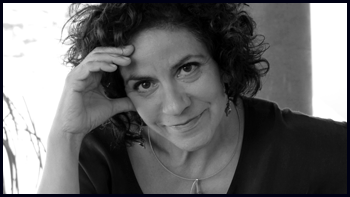
Biografía. / Biography.
Es una de las dramaturgas más destacadas de su generación. Con 30 años de carrera, ha escrito más de 50 obras teatrales. Es libretista de ópera, traductora, directora escénica y conferencista. Con estudios de maestría en Comunicación ha incursionado en el campo editorial, la traducción, la docencia y la investigación. Estudió actuación durante varios años con José Luis Ibáñez. En 1990 se inicia en la dramaturgia. Autora de Oficio de dramaturgo. Becaria del Centro Mexicano de Escritores y del National Endowment for the Arts; recibió la beca de Jóvenes Creadores y fue invitada al Programa Gateways en Texas; artista en residencia en el Writers Room, Nueva York; pionera del programa para dramaturgos en The Lark de Nueva York. En 2014, recibió la beca Iberescena, para residencia artística en Madrid y en Asturias. Ha recibido premios nacionales e internacionales por su obra dramática. Se ha especializado en la adaptación de textos para la escena. Ha diseñado e impartido seminarios, encuentros y talleres para instituciones culturales y académicas. Miembro del Comité Académico de los Encuentros Iberoamericanos de Productores Escénicos (EIPE) en sus emisiones desde 2010 en México, Argentina y España. Diseñó y fue conductora del programa televisivo Voz de Mujer para Canal 22. Invitada en 2019 y en 2020 como dramaturga internacional destacada al Playwrights Lab en el Centro Banff en Canadá. Miembro del Sistema Nacional de Creadores de Arte.
She is one of the most prominent playwrights of her generation. With a 30-year career, she has written more than 50 plays. She is an opera librettist, translator, stage director, and lecturer. Holding a Master’s degree in Communication, she has worked in publishing, translation, teaching, and research. She studied acting for several years with José Luis Ibáñez. She began her career in playwriting in 1990 and is the author of Oficio de dramaturgo. She has been a fellow of the Mexican Center for Writers and the National Endowment for the Arts; she received the Jóvenes Creadores fellowship and was invited to the Gateways Program in Texas; she was an artist-in-residence at the Writers Room in New York and a pioneer of the playwrights’ program at The Lark in New York. In 2014, she received the Iberescena grant for an artistic residency in Madrid and Asturias. She has received national and international awards for her dramatic work and has specialized in adapting texts for the stage. She has designed and led seminars, meetings, and workshops for cultural and academic institutions. She has been a member of the Academic Committee of the Ibero-American Meetings of Performing Arts Producers (EIPE) since 2010, participating in editions held in Mexico, Argentina, and Spain. She created and hosted the television program Voz de Mujer for Canal 22. She was invited in 2019 and 2020 as a featured international playwright to the Playwrights Lab at the Banff Centre in Canada. She is a member of the National System of Art Creators.
Escritura. / Style.
Silvia Peláez escribe para compartir lo que la sorprende, abisma, confunde, molesta, duele o le da curiosidad. Inicia una obra desde una idea, una anécdota, un concepto o un personaje, transponiendo y yuxtaponiendo imágenes y tiempos, espacios y relaciones, e imaginando una estructura. Crea múltiples capas de sentido en las historias. La forma final de un texto suyo depende de la historia que quiere contar. Escribe recabando imágenes, escuchando música, investigando por meses. Sus textos siguen estructuras lineales interrumpidas por fragmentos de tiempo y acciones que interrumpen la continuidad rígida hasta convertirse en propuestas no lineales y complejas. Busca la belleza en las palabras y en las situaciones dramáticas, y abreva en la poesía, buscando contrastes en lo visual y la fuerza de los personajes. Una poética vinculada con la tensión dramática. Sus temas son polémicos y controversiales, como las nuevas sexualidades, la eutanasia, el crimen, la intolerancia, la migración… Tensión y pasión, silencio y palabra. Cree en el humor. También le apasiona abordar en el teatro la vida de otras personas como Sylvia Plath, Coco Chanel, Kafka, Hitler, Malcolm Lowry, Érszebet Báthory... Le intriga la vejez, el crimen, el amor, las emociones operísticas y las sutilezas en las relaciones. Escribe sin cesar para compartir este viaje.
Silvia Peláez writes to share that which surprises, confounds, confuses, annoys, pains or arouses curiosity in her. She starts her works from a single idea, anecdote, concept or character, transposing and juxtaposing images and times, spaces and relationships, and then coming up with a structure. She creates multiple layers of meaning in her stories. The final form assumed by her texts depends on the story that she wishes to tell. She writes by gathering images, listening to music and researching for months on end. Her texts follow linear structures that are interrupted by fragments of time, and actions that interrupt the rigid continuity, culminating in complex non-linear proposals. She seeks beauty in her words and dramatic situations, drawing from poetry, while looking for visual contrasts and the strengths of her characters. Poetry bound to dramatic tension. The topics she writes about are polemic and controversial, such as new sexualities, euthanasia, crime, intolerance, migration, etc. Tension and passion, silence and words. She believes in humour. She also likes using theatre to depict the lives of other people, such as Sylvia Plath, Coco Chanel, Kafka, Hitler, Malcolm Lowry and Érszebet Báthory, amongst others. She is intrigued by ageing, crime, love, operatic emotions and subtleties in relationships. She writes without pausing for breath to share this journey.
Obras. / Plays.
-
2020. LA LUCIÉRNAGA
-
(En versión ópera) Sala Miguel Covarrubias, Centro Cultural Universitario, UNAM, México
-
2020. BRAVURA
-
Con apoyo del Sistema Nacional de Creadores del Fondo Nacional para la Cultura y las Artes, México
-
2020. AJENIDAD
-
Premio Nacional de Radio Teatro Max Aub, UNAM, México
Editorial Paso de Gato, antología
-
2019. CUANDO EL VIENTO ES PÚRPURA
-
Sistema Nacional de Creadores de Arte, FONCA, México
-
2019. VISIONES O EL SÍNDROME DE CASANDRA
-
(Primera versión) Sistema Nacional de Creadores de Arte, FONCA, México, 2013
-
2019. ANTESALA DE LA FELICIDAD
-
Sistema Nacional de Creadores de Arte, FONCA, México + Traducida, leída y revisada en el Playwrights Lab19, como invitada internacional distinguida en el Banff Center for the Arts and Creativity, en Alberta, Canadá
-
2017. A PUNTO DE VENENO
-
En coescritura con Guillermo Heras
-
2017. EL OTRO
-
A los 200 años de la publicación de Frankenstein
-
2016. QUÉ SABE EL PEZ DEL AGUA
-
Panamá, Estados Unidos, Canadá, Alaska
Participante en el Programa Internacional Climate Change Theater Action, 2016
-
2016. ANAÏS & ANAÏS
-
Inédita
-
2016. INSTANTES DE ERRANCIA Y LOCURA
-
Centro de Arte Dramático de Michoacán, México
-
2016. CASA CHICA
-
Casa Universitaria del Libro, Ciudad de México. Festival Impulso, 2019
-
2016. PASEO POR LAS ESTRELLAS
-
Teatro de la Máscara, Ciudad de México
-
2015. COCO, MADEMOISELLE GABRIELLE
-
Teatro La Capilla, Ciudad de México
Programa de Apoyo a Proyectos y Coinversiones Culturales FONCA
-
2014. CARACOLAS SIN MAR
-
Apoyada por el Programa Creación Escénica Iberoamericana en residencia Iberescena 2013-2014. Con la participación de Nuevo Teatro Fronterizo (Madrid), produce Arte Prosimax S.C. (México) + Con lecturas En voz del autor en La Corsetería (Madrid) y Teatro El Milagro (México)
-
2013. RUMORES ENTRE HITLER Y KAFKA
-
Inaugura ciclo "Las voces del teatro" en el Centro de Creación Literaria Xavier Villaurrutia, Ciudad de México
Proyecto como miembro del Sistema Nacional de Creadores, Fondo Nacional para la Cultura y las Artes, México, con el título H & K.
-
2012. ANFIBIGÜEDAD
-
Dramafest 2014, Foro La Gruta, Ciudad de México + (Lectura dramatizada) Teatro Morelos, Cuernavaca, México
Sistema Nacional de Creadores 2010-2013
-
2012. LOS CERDOS
-
Teatro El Granero, Centro Cultural del Bosque, Instituto Nacional de Bellas Artes, Ciudad de México
Seleccionada en la Convocatoria del la Coordinación Nacional de Teatro del Instituto Nacional de Bellas Artes
-
2011. TRANCE
-
Foro El Bicho, Ciudad de México
-
2010. SÓLO VINE A VER EL JARDÍN
-
CELCIT, Argentina, Dramática Latinoamericana 393, Textos teatrales
-
2007. ÉRSZEBET, LA BAÑISTA DE LA TINA PÚRPURA
-
Dentro de la trilogía vampírica
Teatro La Capilla, Ciudad de México
Editorial El Milagro, 2016
-
2006. FIEBRE 107 GRADOS
-
Teatro El Galeón, Ciudad de México, Compañía Nacional de Teatro
Beca The writers room - FONCA, Nueva York / Contacto cultural para traducción en The Lark Theater Company, Nueva York, y lectura dramatizada
Editorial El Milagro-Conaculta, Colección La Centena, 2006
-
2004. FASCINACIÓN POR LO VERDE
-
Beca del Centro Mexicano de Escritores (en primera versión)
Antología Territorio de Fábula, CAEN, Tijuana, Baja California, México
-
1998. INMORTALIDAD
-
Dentro de la trilogía vampírica
Teatro Helénico
Editorial El Milagro, 2016
-
1994. SUICIDIO A DOS MANOS
-
Sótano del Teatro Carlos Lazo, Facultad de Arquitectura, UNAM, Ciudad de México, con el título de Linares, el detective
Premio único, Mejor obra policiaca 1994 de Sociedad General de Escritores de México y Procuraduría General de Justicia de la Ciudad de México
-
1994. EL VAMPIRO DE LONDRES
-
Dentro de la trilogía vampírica
Teatro El Galeón
Editorial El Milagro, 2016
-
1990. VELORIO
-
Beca Centro Mexicano de Escritura, 1990
Primer lugar, Premio Universidad Autónoma de Nuevo León, México, 1990
Antología El Nuevo Teatro II, Editorial El Milagro, 2000, pp. 395-431
-
Leyenda / Legend
-
Estreno / Premio / Beca / Publicación
Premiere / Award / Grant / Publication
Editorial Paso de Gato, antología
Participante en el Programa Internacional Climate Change Theater Action, 2016
Programa de Apoyo a Proyectos y Coinversiones Culturales FONCA
Proyecto como miembro del Sistema Nacional de Creadores, Fondo Nacional para la Cultura y las Artes, México, con el título H & K.
Sistema Nacional de Creadores 2010-2013
Seleccionada en la Convocatoria del la Coordinación Nacional de Teatro del Instituto Nacional de Bellas Artes
Teatro La Capilla, Ciudad de México
Editorial El Milagro, 2016
Beca The writers room - FONCA, Nueva York / Contacto cultural para traducción en The Lark Theater Company, Nueva York, y lectura dramatizada
Editorial El Milagro-Conaculta, Colección La Centena, 2006
Antología Territorio de Fábula, CAEN, Tijuana, Baja California, México
Teatro Helénico
Editorial El Milagro, 2016
Premio único, Mejor obra policiaca 1994 de Sociedad General de Escritores de México y Procuraduría General de Justicia de la Ciudad de México
Teatro El Galeón
Editorial El Milagro, 2016
Primer lugar, Premio Universidad Autónoma de Nuevo León, México, 1990
Antología El Nuevo Teatro II, Editorial El Milagro, 2000, pp. 395-431
Premiere / Award / Grant / Publication
sus obras en / their works on

-
 2010 >60' 5 1
SÓLO VINE A VER EL JARDÍN
Silvia Peláez -
 2020 >60' 1 1
LA LUCIÉRNAGA
Silvia Peláez -
 2020 >60' 4 2
BRAVURA
Silvia Peláez -
 2019 30'-60' 2 2
CUANDO EL VIENTO ES PÚRPURA
Silvia Peláez -
 2019 >60' 1 3
VISIONES O EL SÍNDROME DE CASANDRA
Silvia Peláez -
 2019 >60' 5 5
ANTESALA DE LA FELICIDAD
Silvia Peláez -
2017 >60' 2 4
A PUNTO DE VENENO
Silvia Peláez y Guillermo Heras -
2016 >60' 2 3
ANAÏS & ANAÏS
Silvia Peláez -
2012 30'-60' 3 2
ANFIBIGÜEDAD
Silvia Peláez -
2014 >60' 5 5
CARACOLAS SIN MAR
Silvia Peláez -
2016 >60' 6-10 >10
CASA CHICA
Silvia Peláez -
 2007 >60' 6-10 0
ÉRSZEBET, LA BAÑISTA DE LA TINA PÚRPURA
Silvia Peláez -
 2006 >60' 3 6-10
FIEBRE 107 GRADOS
Silvia Peláez -
 2016 30'-60' 0 1
INSTANTES DE ERRANCIA Y LOCURA
Silvia Peláez -
2012 >60' 4 0
LOS CERDOS
Silvia Peláez -
 2016 30'-60' 0 2
PASEO POR LAS ESTRELLAS
Silvia Peláez -
 2013 >60' 4 5
RUMORES ENTRE HITLER Y KAFKA
Silvia Peláez -
1994 >60' 3 6-10
SUICIDIO A DOS MANOS
Silvia Peláez -
 2014 30'-60' 1 0
TRANCE
Silvia Peláez -
1990 >60' 6-10 >10
VELORIO
Silvia Peláez