
Un castaño, un almendro o un árbol que dé fruta
Laura Mihon, 2024
sobre / about


Datos técnicos. / Technical details.
Duración
>60'
Duration
>60'
Personajes
3
Characters
3
Actrices
2
Actresses
2
Actores
1
Actors
1
Público
Adulto
Audience
Adult
Formato
Pequeño
Format
Small
Sinopsis. / Synopsis.
Una madre desayuna con sus dos hijos. Huele a café y a bizcocho recién hecho. Se reúnen por primera vez en mucho tiempo. El padre no está, murió hace unos años, dejando atrás una habitación llena de trastos que ahora se disponen a vaciar. La hija siempre se pierde los funerales. El hijo tiene insomnio y se le juntan los días. La madre va a hacer una petición muy importante a sus hijos; tendrá que hacerse escuchar. Un castaño, un almendro o un árbol que dé fruta es una obra sobre cómo gestionamos la muerte, la propia y la ajena, en un mundo diseñado para ignorarla.
A mother has breakfast with her two children. The smell of coffee and freshly baked sponge cake fills the air. They gather together for the first time in a long while. The father is not there; he died a few years ago, leaving behind a room full of clutter that they are now about to clear out. The daughter always misses funerals. The son suffers from insomnia and his days blur into one another. The mother is about to make an important request to her children; she will need to make herself heard. A chestnut tree, an almond tree or a fruit-bearing tree is a play about how we deal with death—our own and that of others—in a world designed to ignore it.
Notas. / Notes on the piece.
Hoy en día, cuando una persona muere, en tres horas una funeraria recoge el cuerpo, se lo lleva a una nevera, lo rellena de porquería química, lo maquilla y lo convierte en un muñeco de cera que, con suerte, se parece a esa persona de joven. Han quedado lejos los días en que el cuerpo se velaba en familia y se convivía con la muerte con naturalidad. Todo lo que nos rodea está diseñado para hacernos olvidar que un día moriremos, que la muerte forma parte de la vida. La protagonista de esta historia es una mujer mayor que ha aprendido a convivir con la soledad y que se ha redescubierto a sí misma. Ha asumido los cambios de su cuerpo y se ha reconciliado con la idea de morir. Se ha liberado y quiere hacerse oír. La obra apuesta por un teatro íntimo y sensorial, por el sentido del humor y la poesía de lo cotidiano, sin dramatismos.
Today, when a person dies, within three hours a funeral home collects the body, takes it to a refrigerated chamber, fills it with chemical substances, applies makeup and turns it into a wax-like doll that, with luck, resembles that person in their youth. Far removed are the days when the body was waked within the family home and death was lived with more natural familiarity. Everything around us is designed to make us forget that we will die one day, that death is part of life. The protagonist of this story is an elderly woman who has learned to live with solitude and has rediscovered herself. She has accepted the changes in her body and reconciled herself with the idea of dying. She has become free and wants to make herself heard. The play embraces an intimate and sensorial theatre, grounded in humour and the poetry of the everyday, without melodrama.
Otros datos. / Other information.
XII Laboratorio SGAE de Escritura teatral
Publicación: SGAE
sobre / about



Biografía. / Biography.
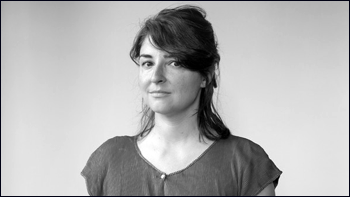
Dramaturga, directora y gestora cultural. Nace en Rumanía y llega a España con cuatro años. Desde muy pequeña empieza a escribir en cuadernos que nunca acaba y que solo enseña a su madre y a su abuela. Llega al teatro por casualidad, trabajando en producción en Barcelona y mirando siempre con envidia el trabajo artístico de sus compañeros. En su compañía, el Col·lectiu La Santa, confían en ella muy rápido animándola a escribir y dirigir y acaba estrenando tres obras en Barcelona antes de asumir que el teatro ha llegado para quedarse. Se empieza a formar en el Obrador de la Sala Beckett, con Victoria Szpunberg, Gloria Balañà, Javier Daulte, Alberto Conejero. Cuando siente que hacer otra cosa que no sea teatro ya no tiene sentido se va a Madrid a completar su formación en el Máster de Creación Teatral dirigido por Juan Mayorga, donde la inspiran Pablo Messiez, Andrés Lima, Pablo Remón, Álvaro Tato, Carlos Tuñón, entre muchos otros. El teatro le ha dado becas, algún premio, viajes y colaboraciones. Pero donde más ha aprendido sin duda siempre es en la sala de ensayo, al lado de los actores y actrices con los que ha tenido la suerte de trabajar.
Playwright, director, and cultural manager. Born in Romania, she moved to Spain at the age of four. From a very young age, she began writing in notebooks she never finished—only showing them to her mother and grandmother. She came to theatre by chance, working in production in Barcelona and always watching her artistic colleagues with a sense of envy. In her company, Col·lectiu La Santa, they quickly placed their trust in her, encouraging her to write and direct. She ended up premiering three plays in Barcelona before realizing that theatre was here to stay in her life. She began her training at the Obrador de la Sala Beckett, learning from Victoria Szpunberg, Gloria Balañà, Javier Daulte, and Alberto Conejero. When doing anything other than theatre no longer made sense to her, she moved to Madrid to complete her education in the Master's in Theatrical Creation led by Juan Mayorga, where she found inspiration in Pablo Messiez, Andrés Lima, Pablo Remón, Álvaro Tato, Carlos Tuñón, and many others. Theatre has given her grants, a few awards, travel opportunities, and collaborations. But without a doubt, where she’s learned the most has always been in the rehearsal room, alongside the actors and actresses she’s been lucky enough to work with.
Escritura. / Style.
«Escribir teatro para mí es un ejercicio de mirar hacia fuera y hacia adentro a la vez. La escritura de alguna manera me tiende un puente hacia el mundo, y creo que la adrenalina de que otras personas lo crucen conmigo es lo que me tiene tan enganchada. Nunca escribo sola y donde más inspirada me siento es en la sala de ensayo, donde las actrices y los actores me regalan palabras y siempre saben más. Escribo sobre mis dudas existenciales, sobre la muerte, sobre el desarraigo, sobre cosas que veo y que me pasan, pero ¿y quién no? Mis textos suelen ser un poco poéticos queriendo y un poco humorísticos sin querer. La escritura para mí empezó como un juego y mi mayor aspiración ahora mismo es sentir que lo sigue siendo.» (Laura Mihon).
«Writing theatre, for me, is an exercise in looking outward and inward at the same time. Writing, in some way, builds a bridge between myself and the world, and I think the adrenaline of having others cross it with me is what keeps me so hooked. I never write alone, and I feel most inspired in the rehearsal room, where the actresses and actors gift me their words and always know more. I write about my existential doubts, about death, about rootlessness, about things I see and things that happen to me—but then again, who doesn’t? My texts tend to be a little poetic on purpose and a little humorous by accident. Writing started out as a game for me, and right now, my greatest aspiration is to feel like it still is.» (Laura Mihon).
Obras. / Plays.
-
2024. UN CASTAÑO, UN ALMENDRO O UN ÁRBOL QUE DÉ FRUTA
-
XII Laboratorio SGAE de Escritura teatral
SGAE
-
2024. RENATA
-
Beca Premio Barcelona 2021
-
2022. VECINAS
-
(Lectura dramatizada) CDN, Madrid
Premio Teatro Exprés 2022
Revista Las Puertas del Drama nº58
-
2021. CALÉNDULA
-
Sala Off Latina, Madrid
-
2019. EXILIO (LA NOCHE SIN TIEMPO)
-
Coautora junto a Jeferson Palacio
Teatro de la Maldita Vanidad, Bogotá, Colombia + Festival Grec, Barcelona
-
2018. LA HORA AZUL
-
Teatro Tantarantana, Barcelona
-
2017. UNA CASA EN EL ESTE
-
Teatro Tantarantana, Barcelona
-
2016. CUANDO ACABE LA NOCHE
-
Teatro Tantarantana, Barcelona
-
2014. RELATOS AJENOS
-
(Lectura dramatizada) Sala Beckett, Barcelona
-
Leyenda / Legend
-
Estreno / Premio / Beca / Publicación
Premiere / Award / Grant / Publication
SGAE
Premio Teatro Exprés 2022
Revista Las Puertas del Drama nº58
Teatro de la Maldita Vanidad, Bogotá, Colombia + Festival Grec, Barcelona
Premiere / Award / Grant / Publication



