Áurea
Miguel Ferrando Rocher, 2019
sobre / about


Datos técnicos. / Technical details.
Duración
>60'
Duration
>60'
Personajes
3
Characters
3
Actrices
2
Actresses
2
Actores
1
Actors
1
Público
Adulto
Audience
Adult
Formato
Pequeño
Format
Small
Sinopsis. / Synopsis.
Hoy intentaremos realizar algunos trucos de magia. Os daremos datos concretos y quizá algunas instrucciones equivocadas. Podremos confundiros con historias sobre rituales, profecías y mitos, y tal vez consigamos deslumbraros con términos que suenan más divinos que humanos. Tres personas se reúnen para demostrar que existe una proporción capaz de explicar la belleza, ordenar el universo y dar sentido a todo aquello que no comprendemos. Necesitan creer que esa fórmula existe. La buscarán en sus cuerpos, en las obras de arte, en la naturaleza y en los relatos que los seres humanos han construido para domesticar el caos. Pero cuanto más se acercan a una respuesta, más difícil resulta distinguir la ciencia de la superstición, la certeza del deseo y la verdad del engaño. Àurea es una celebración luminosa, lúdica y profundamente humana de nuestra necesidad de encontrar un orden, incluso cuando sospechamos que quizá no lo haya.
Today we will attempt to perform a few magic tricks. We will give you specific facts and perhaps a few misleading instructions. We may confuse you with stories of rituals, prophecies, and myths, and perhaps dazzle you with terms that sound more divine than human. Three people come together to prove that there is a proportion capable of explaining beauty, ordering the universe, and making sense of everything we do not understand. They need to believe that such a formula exists. They will search for it in their bodies, in works of art, in nature, and in the stories human beings have created to tame chaos. But the closer they get to an answer, the harder it becomes to distinguish science from superstition, certainty from desire, and truth from deception. Àurea is a luminous, playful, and deeply human celebration of our need to find order, even when we suspect there may be none.
Notas. / Notes on the piece.
Àurea nació en 2019, en un momento en que las noticias falsas empezaban a alterar de manera visible nuestra relación con la realidad. Me inquietaba comprobar que cada vez resultaba más difícil distinguir un hecho de una opinión, una demostración de una ocurrencia o una verdad de una mentira repetida con suficiente seguridad. Si aquella sensación ya era intensa entonces, ahora la obra resulta todavía más cercana. Elegí la proporción áurea porque es un territorio perfecto para hablar de esa confusión. A su alrededor conviven matemáticas reales, mitos culturales, asociaciones discutibles y afirmaciones falsas que hemos aceptado durante años porque suenan hermosas y parecen científicas. Tres intérpretes construyen ante el público una demostración seductora llena de datos, imágenes, trucos y pequeñas trampas. Todo parece encajar hasta que empezamos a preguntarnos quién habla, qué pruebas aporta y por qué deseamos tanto creerle.
Àurea was created in 2019, at a time when fake news was beginning to visibly disrupt our relationship with reality. I was increasingly troubled by how difficult it was becoming to distinguish fact from opinion, proof from speculation, or truth from a lie repeated with enough confidence. If that feeling was already intense then, the play feels even more relevant today. I chose the golden ratio because it is the perfect territory in which to explore this confusion. Around it coexist real mathematics, cultural myths, questionable associations, and false claims that we have accepted for years because they sound beautiful and appear scientific. Three performers construct a seductive demonstration before the audience, filled with facts, images, tricks, and little traps. Everything seems to fit together until we begin to ask ourselves who is speaking, what evidence they are providing, and why we are so eager to believe them.
Otros datos. / Other information.
Estreno: Espacio Inestable, València, 2019, dentro del ciclo Graners de Creació
Proyecto seleccionado para el programa de residencias artísticas Graners de Creació 2019–2022, con residencia acogida por Espacio Inestable
sobre / about


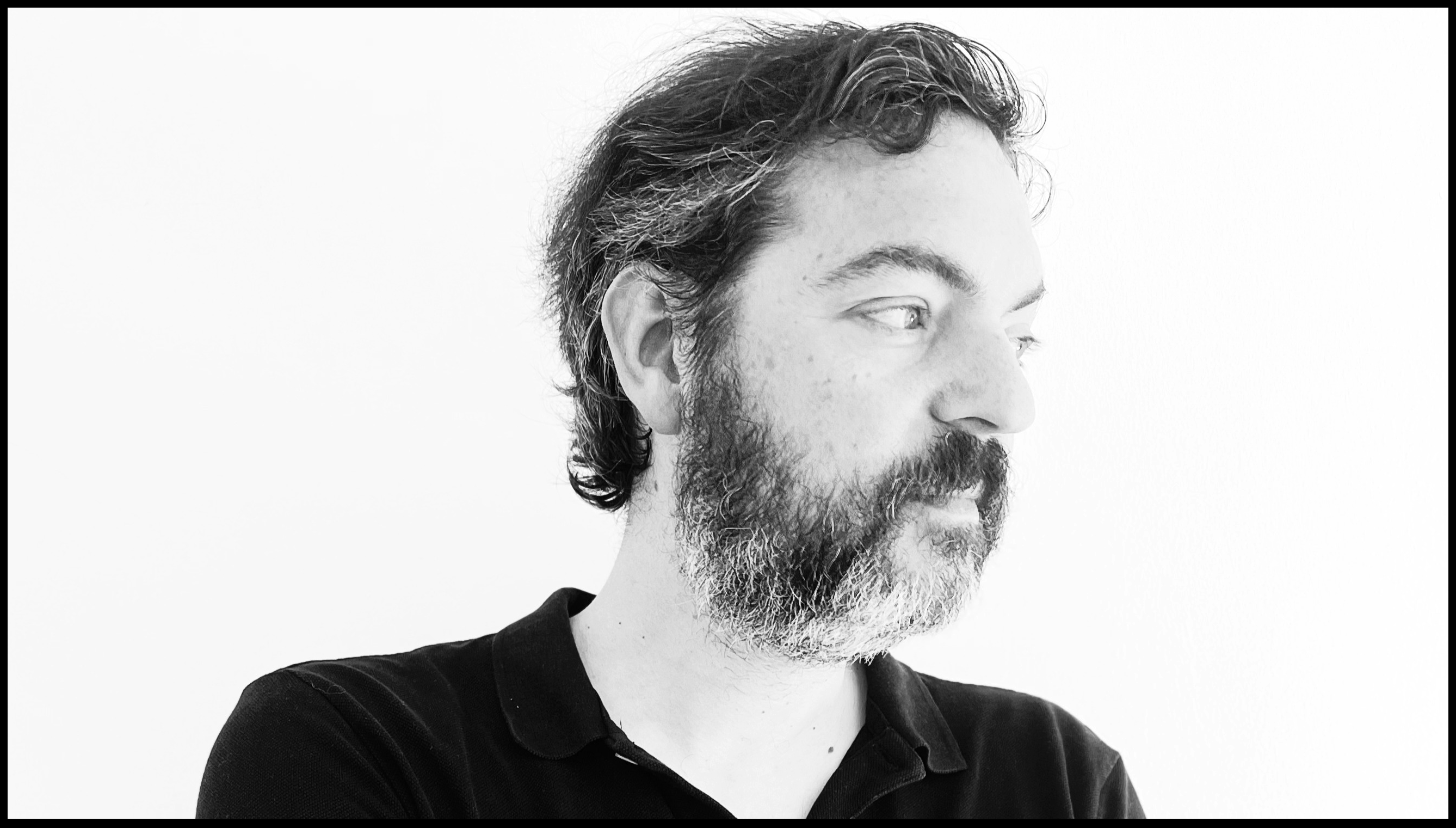

Biografía. / Biography.
Miguel Ferrando Rocher (Alcoy, 1985) es dramaturgo y director de escena, licenciado en Dirección Escénica y Dramaturgia por la Escola Superior d’Art Dramàtic de València. Fundó Groc Teatre, compañía con la que ha desarrollado una trayectoria propia en la dramaturgia valenciana contemporánea. Ha ampliado su formación con Carles Alberola, Paco Zarzoso, Jorge Picó, María Velasco, Pablo Messiez, Alberto Conejero, Borja Ortiz de Gondra, Itziar Pascual, Carles Alfaro, Eva Zapico y Xavier Puchades. Su teatro se nutre de hechos y personajes reales que transforma en ficciones vivas, luminosas y cercanas al público. Genovese parte del asesinato de Kitty Genovese; Tourmalet, de los relatos humanos del ciclismo y de figuras como Ocaña, Poulidor o Bartali; y L’Innocent, del caso de Pablo Ibar. En sus obras conviven el drama y la comedia, la tensión moral y el sentido del humor, con especial atención al ritmo, la emoción y las contradicciones humanas. Sus textos y espectáculos han podido verse, entre otros, en los Teatros Luchana, Teatre Micalet, Sala Ultramar, Sala Inestable y Sala Círculo, así como en los festivales Escènia y Russafa Escènica. Su obra ha sido publicada por La Caja Books. Genovese obtuvo el Premio Max del Público 2019 y fue candidata al Premio Max al Mejor Espectáculo Revelación; Tourmalet obtuvo el primer Premio Nacional Escènia Foios y el Premio AAPV al Actor Revelación.
Miguel Ferrando-Rocher (Alcoy, 1985) is a playwright and theatre director, with a degree in Theatre Directing and Dramaturgy from the Escola Superior d’Art Dramàtic de València. He founded Groc Teatre, a company through which he has developed a distinctive career within contemporary Valencian playwriting. He has furthered his training with Carles Alberola, Paco Zarzoso, Jorge Picó, María Velasco, Pablo Messiez, Alberto Conejero, Borja Ortiz de Gondra, Itziar Pascual, Carles Alfaro, Eva Zapico and Xavier Puchades. His theatre draws on real events and figures, transforming them into vivid, luminous fictions that remain close to the audience. Genovese is inspired by the murder of Kitty Genovese; Tourmalet by the human stories of cycling and figures such as Ocaña, Poulidor and Bartali; and L’Innocent by the case of Pablo Ibar. His work brings together drama and comedy, moral tension and humour, with particular attention to rhythm, emotion and human contradictions. His plays and productions have been presented, among others, at Teatros Luchana, Teatre Micalet, Sala Ultramar, Sala Inestable and Sala Círculo, as well as at the Escènia and Russafa Escènica festivals. His work has been published by La Caja Books. Genovese received the 2019 Premio Max del Público and was nominated for the Premio Max for Best Breakthrough Production; Tourmalet received the first Premio Nacional Escènia Foios and the AAPV Award for Breakthrough Actor.
Escritura. / Style.
«Escribo a partir de una pregunta que no sé responder. A menudo esa pregunta nace de un hecho real, de una figura histórica o de una noticia que me persigue durante meses. No me interesa reconstruir la realidad de manera documental, sino utilizarla como una grieta desde la que observarnos. Kitty Genovese, Pablo Ibar o los grandes mitos del ciclismo me atraen porque, detrás de sus historias, aparecen la culpa, la justicia, el miedo, la identidad, la memoria y nuestra necesidad de convertir la vida en relato. Busco un teatro vivo, luminoso y cercano. Incluso cuando abordo asuntos dolorosos, necesito que haya humor, ritmo, contradicción y una corriente de vida que atraviese la escena. No creo que la profundidad exija solemnidad. Me interesa que el público pueda reír, emocionarse y, casi sin advertirlo, salir del teatro con una pregunta incómoda. Escribo pensando en los actores y en lo que sucede entre los cuerpos, las palabras y los silencios. Trabajo mucho la oralidad, el ritmo y la arquitectura de la obra, pero intento que esa construcción no se vea. Me gusta que los personajes parezcan más vivos que las ideas que encarnan y que nunca puedan reducirse a una sola explicación. Mi formación científica también atraviesa mi manera de escribir. Observo, formulo hipótesis, dudo y desconfío de las respuestas demasiado fáciles. Escribo para comprender un poco mejor el mundo, aunque cada obra termine por plantearme nuevas preguntas.» (Miguel Ferrando-Rocher).
«I write from a question I don’t know how to answer. Often, that question arises from a real event, a historical figure, or a news story that stays with me for months. I am not interested in reconstructing reality in a documentary way, but in using it as a crack through which to observe ourselves. Kitty Genovese, Pablo Ibar and the great myths of cycling attract me because, behind their stories, we find guilt, justice, fear, identity, memory, and our need to turn life into a narrative. I seek a theatre that is alive, luminous and close to its audience. Even when I address painful subjects, I need there to be humour, rhythm, contradiction and a current of life running through the stage. I do not believe that depth requires solemnity. I want the audience to be able to laugh, feel moved and, almost without realising it, leave the theatre with an uncomfortable question. I write with actors in mind, and with an awareness of what happens between bodies, words and silences. I work extensively on orality, rhythm and the architecture of the play, but I try not to let that construction show. I like my characters to seem more alive than the ideas they embody, and I never want them to be reducible to a single explanation. My scientific background also shapes the way I write. I observe, formulate hypotheses, doubt, and distrust answers that come too easily. I write to understand the world a little better, even though every play ultimately leaves me with new questions.» (Miguel Ferrando-Rocher).
Obras. / Plays.
-
2026. LOS FEYNMAN
-
Inédita
-
2026. L’INNOCENT / EL INOCENTE
-
Sala Círculo, València, 2026 / Compañía: Groc Teatre
Proyecto beneficiario de ayudas de la Universitat Politècnica de València, la Generalitat Valenciana y el Ayuntamiento de València para su creación, producción y exhibición
-
2019. ÁUREA
-
Espacio Inestable, València, 2019, dentro del ciclo Graners de Creació
Proyecto seleccionado para el programa de residencias artísticas Graners de Creació 2019–2022, con residencia acogida por Espacio Inestable
-
2018. TOURMALET
-
Teatre Micalet, València, 2018 + Festival Escènia de Foios
Primer Premio del Jurado, Festival Escènia de Foios + Premio AAPV al Actor Revelación, Festival Escènia de Foios
La Caja Books, 2018, en el volumen Se necesitan héroes, junto a La estética del dolor, de Priscila Lessa + Incluida en el estuche La Caja de la Bicicleta, junto a Elogio del Tour, de Éric Fottorino, y La Ilíada en maillot, de Carlos Arribas
-
2017. GENOVESE
-
Sala Ultramar, València, 2017
Premio Max del Público, 2019 + Candidata al Premio Max al Mejor Espectáculo Revelación, 2019
-
Leyenda / Legend
-
Estreno / Premio / Beca / Publicación
Premiere / Award / Grant / Publication
Proyecto beneficiario de ayudas de la Universitat Politècnica de València, la Generalitat Valenciana y el Ayuntamiento de València para su creación, producción y exhibición
Proyecto seleccionado para el programa de residencias artísticas Graners de Creació 2019–2022, con residencia acogida por Espacio Inestable
Primer Premio del Jurado, Festival Escènia de Foios + Premio AAPV al Actor Revelación, Festival Escènia de Foios
La Caja Books, 2018, en el volumen Se necesitan héroes, junto a La estética del dolor, de Priscila Lessa + Incluida en el estuche La Caja de la Bicicleta, junto a Elogio del Tour, de Éric Fottorino, y La Ilíada en maillot, de Carlos Arribas
Premio Max del Público, 2019 + Candidata al Premio Max al Mejor Espectáculo Revelación, 2019
Premiere / Award / Grant / Publication