
Gangarilla. El día del acabose
Arturo Echavarren, 2011
sobre / about

Datos técnicos. / Technical details.
Duración
>60'
Duration
>60'
Personajes
6-10
Characters
6-10
Actrices
1
Actresses
1
Actores
2
Actors
2
Público
Adulto
Audience
Adult
Formato
Pequeño
Format
Small
Sinopsis. / Synopsis.
Es una fábula cómica para tres actores cuyo argumento rescata la fantasía, la sátira y el humor del Siglo de Oro. Bajo los negros nubarrones que anuncian el día del Juicio Final, se encuentran de nuevo tres cómicos barrocos, Roque, Pablo y Rodriga, dispuestos a rendir cuenta de sus actos sobre la Tierra ante el tribunal celestial y escapar a toda costa de los hornos infernales. Amor, humor y muerte se dan la mano en esta comedia que, bajo la luz deformadora de la farsa, nos enfrenta a los acontecimientos que han hecho repicar con estrépito el corazón de los seres humanos desde que el mundo es mundo.
This is a comic fable for three actors that revives the fantasy, satire, and humor of the Spanish Golden Age. Beneath the dark storm clouds heralding Judgment Day, three Baroque performers—Roque, Pablo, and Rodriga—reunite, ready to account for their deeds on Earth before the celestial court and to escape, at all costs, the fiery furnaces of Hell. Love, humor, and death join hands in this comedy that, through the distorting lens of farce, confronts us with the events that have made human hearts thunder since the beginning of time.
Otros datos. / Other information.
Estreno: Corral de Comedias, Almagro
Premios MAX 2013, Nominado al Mejor Espectáculo Revelación + Accésit del I Premio de Dramaturgia Alfonso Jiménez Romero
sobre / about


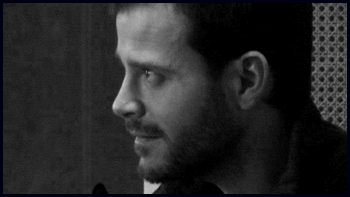

Biografía. / Biography.
Por vocación y formación, Arturo Echavarren ha combinado de manera regular la escritura teatral con el estudio de la Literatura. Licenciado en Filología Hispánica y en Filología Clásica y doctor en esta última disciplina, ha trabajado como docente e investigador en numerosas universidades y centros de investigación, como la Universidad Complutense de Madrid y el Consejo Superior de Investigaciones Científicas. Es autor de numerosos libros y artículos científicos, especialmente en el campo de la Literatura del Siglo de Oro, publicados en prestigiosas editoriales nacionales e internacionales. Formado como actor de commedia dell’arte con Patxi Larrea, Carlo Boso, Renato Gatto y Adriano Iurissevich, entre otros, fue director del grupo de teatro navarro de teatro clásico Koribantes. Como dramaturgo, además de numerosas adaptaciones de dramas clásicos, es autor de comedias como "Mozart para todos", estrenada en 2006 en el Centro Conde Duque de Madrid, dentro de la campaña Distrito Mozart, "Gangarilla o el día del acabose", finalista de los Premios Max 2013 en la categoría de espectáculo revelación y galardonada con el accésit del I Premio de Dramaturgia Alfonso Jiménez Romero, y "Nueve elefantes blancos", publicada en 2016 por la Fundación SGAE. El autor recibió en 2011 el premio Cultura Viva en la categoría de escritor revelación, que reconocía “la excelencia de sus piezas dramáticas y su importante aportación en la promoción y difusión de las formas clásicas del teatro”.
By vocation and training, Arturo Echavarren has consistently combined playwriting with the study of literature. He holds degrees in Hispanic Philology and Classical Philology, and a PhD in the latter discipline. He has worked as a teacher and researcher at numerous universities and research centers, including the Complutense University of Madrid and the Spanish National Research Council (CSIC). He is the author of numerous books and scholarly articles, particularly in the field of Golden Age literature, published by prestigious national and international publishers. Trained as a commedia dell’arte actor by Patxi Larrea, Carlo Boso, Renato Gatto, and Adriano Iurissevich, among others, he was also the director of the Navarrese classical theater group Koribantes. As a playwright, in addition to numerous adaptations of classical dramas, he is the author of comedies such as Mozart para todos (Mozart for Everyone), premiered in 2006 at the Conde Duque Cultural Center in Madrid as part of the Distrito Mozart campaign; Gangarilla o el día del acabose, a finalist for the 2013 Max Awards in the Best New Show category and recipient of the runner-up prize for the 1st Alfonso Jiménez Romero Playwriting Award; and Nueve elefantes blancos (Nine White Elephants), published in 2016 by the SGAE Foundation. In 2011, he received the Cultura Viva Award in the Emerging Writer category, recognizing “the excellence of his dramatic works and his significant contribution to the promotion and dissemination of classical theater forms.”
Escritura. / Style.
La dramaturgia de Arturo Echavarren, como deudor de las generaciones literarias que lo precedieron, está influida principalmente por los clásicos, desde Sófocles hasta Beckett, pasando por Lope de Vega, Shakespeare y Valle Inclán. Así, en sus obras se establece un diálogo dinámico entre la tradición clásica y la modernidad, lo cómico y lo trágico, lo real y lo onírico, y lo lírico y lo dramático. El perfeccionamiento de los mundos cómicos constituye asimismo una constante en su creación literaria, donde alcanza singular protagonismo la dimensión lúdica del lenguaje y su estilización. Considera que el teatro debe ser una herramienta de transformación de la conciencia al servicio del espíritu, como pedía Lorca. Por ello, en lo temático, prima lo universal sobre lo particular, para que la escena sea bruñido espejo y no cristal.
Arturo Echavarren’s playwriting, as a heir to the literary generations that preceded him, is primarily influenced by the classics—from Sophocles to Beckett, including Lope de Vega, Shakespeare, and Valle-Inclán. His works thus establish a dynamic dialogue between classical tradition and modernity, the comic and the tragic, the real and the dreamlike, the lyrical and the dramatic. The refinement of comic worlds is also a constant in his literary creation, where the playful dimension of language and its stylization take on a prominent role. He believes that theater should be a tool for the transformation of consciousness in service of the spirit, as Lorca once demanded. For this reason, thematically, the universal takes precedence over the particular, so that the stage becomes a polished mirror, not a mere pane of glass.
Obras. / Plays.
-
2016. EL CABALLERO DEL ESPEJO
-
Inédita
-
2016. MÁS ES EL RUIDO QUE LAS NUECES
-
Inédita
-
2016. SINFONÍA DE LOS TRES BOHEMIOS
-
Inédita
-
2015. NUEVE ELEFANTES BLANCOS
-
III Laboratorio de Escritura Teatral SGAE
Fundación SGAE, serie Teatro Autor 2016
-
2011. GANGARILLA. EL DÍA DEL ACABOSE
-
Corral de Comedias, Almagro
Premios MAX 2013, Nominado al Mejor Espectáculo Revelación + Accésit del I Premio de Dramaturgia Alfonso Jiménez Romero
-
2011. EL PEREGRINO DE SÍ MISMO
-
Inédita
-
Leyenda / Legend
-
Estreno / Premio / Beca / Publicación
Premiere / Award / Grant / Publication
Fundación SGAE, serie Teatro Autor 2016
Premios MAX 2013, Nominado al Mejor Espectáculo Revelación + Accésit del I Premio de Dramaturgia Alfonso Jiménez Romero
Premiere / Award / Grant / Publication
sus obras en / their works on

-
 2016 >60' 0 3
EL CABALLERO DEL ESPEJO
Arturo Echavarren -
 2011 >60' 0 1
EL PEREGRINO DE SÍ MISMO
Arturo Echavarren -
 2016 >60' 2 5
MÁS ES EL RUIDO QUE LAS NUECES
Arturo Echavarren -
 2016 >60' 0 3
SINFONÍA DE LOS TRES BOHEMIOS
Arturo Echavarren -
 2011 >60' 1 2
GANGARILLA. EL DÍA DEL ACABOSE
Arturo Echavarren -
 2015 >60' 1 5
NUEVE ELEFANTES BLANCOS
Arturo Echavarren
