
Las que hablan con las piscinas
Juan Diego Arias, 2022
sobre / about


Datos técnicos. / Technical details.
Duración
>60'
Duration
>60'
Personajes
3
Characters
3
Actrices
1
Actresses
1
Actores
2
Actors
2
Público
Adulto
Audience
Adult
Formato
Mediano
Format
Medium
Sinopsis. / Synopsis.
Un padre le enseña a su hija su oficio: limpiar piscinas en un lujoso complejo de casas de verano cerca de Bogotá. A ella no le interesa mucho aprender el trabajo, pero su padre la necesita. Tiene que ahorrar dinero para que ella pueda volver a la universidad. Ella, sin embargo, no quiere volver porque desea perseguir un sueño que a su padre le parece muy extraño: enseñar a la gente a dormir. Aunque la relación principal es la que existe entre ellos dos, la piscina desempeña un papel fundamental en la historia. La piscina está viva: habla, se mueve. Y también lo está el mundo que la rodea: los insectos, las plantas y los duendes que pasan por allí.
A father teaches his daughter his trade: cleaning swimming pools in a luxurious summer housing complex near Bogotá. She is not particularly interested in learning the job, but her father needs her help. He has to save money so she can return to university. She, however, does not want to go back, as she wishes to pursue a dream her father finds quite strange: teaching people how to sleep. Although the central relationship is between the two of them, the pool plays a fundamental role in the story. The pool is alive—it speaks, it moves. And so is the world around it: the insects, the plants, and the goblin-like creatures that pass through it.
Notas. / Notes on the piece.
La obra la escribí durante el curso de dramaturgia del MFA en Creative Writing in Spanish de la Universidad de Nueva York (NYU). Su escritura es paralela a mis primeros ensayos sobre el tema que estoy desarrollando en mi disertación doctoral: el ninguneo como práctica social en la guerra civil colombiana. Si bien la palabra ninguneo se usa coloquialmente para referirse a que una persona ignora a otra, su etimología indica que es la acción por la cual alguien se convierte en nadie. Octavio Paz teoriza esta práctica en su ensayo “Máscaras mexicanas” y cuenta una historia personal en la que una “criada” llega de noche a su casa y, al escuchar que Paz pregunta quién está ahí, contesta: “Nadie”. A partir de esta historia y de unas imágenes que yo tenía en la cabeza (una piscina antes del amanecer y unos insectos que salen de ella), yo escribí una obra en la que los alguien y los nadie no representan identidades fijas y la creatividad permite resistir y sublevarse ante ciertas violencias.
I wrote the play during the playwriting course of the MFA in Creative Writing in Spanish at New York University (NYU). Its writing runs parallel to my early essays on the subject I am developing in my doctoral dissertation: ninguneo as a social practice in the Colombian civil war. While the word ninguneo is used colloquially to refer to one person ignoring another, its etymology points to the act by which someone becomes nobody. Octavio Paz theorizes this practice in his essay “Máscaras mexicanas”, where he recounts a personal story in which a maid arrives at his house at night and, when he asks who is there, replies: “Nobody.” Drawing on that story, as well as on a set of images I had in mind—a swimming pool before dawn and insects emerging from it—I wrote a play in which “somebodies” and “nobodies” do not represent fixed identities, and where creativity becomes a way to resist and rise up against certain forms of violence.
Otros datos. / Other information.
Publicación: Revista Casapaís, No. 8, pp. 152-174, Uruguay, ISSN: 2730-5260
sobre / about


Biografía. / Biography.
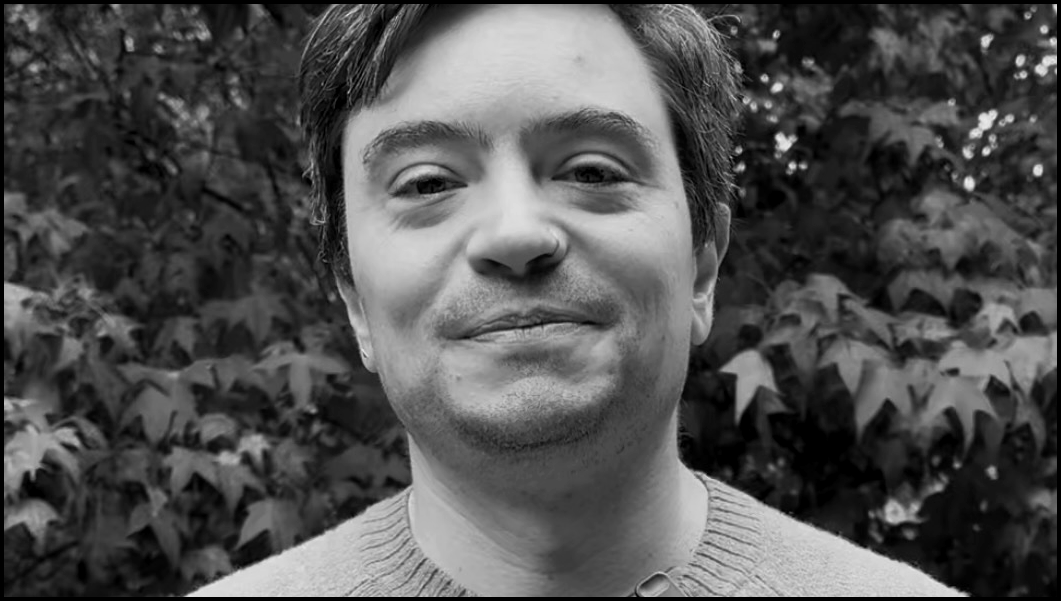
Juan Diego estudió literatura en la Universidad de los Andes (Bogotá, Colombia). Él quería ser escritor y, por eso, estudió guion cinematográfico en FAMU (Praga, Chequia), pero, al regresar a Bogotá, se enamoró del teatro. Trabajó por casi 10 años con la Fundación Teatro Libre de Bogotá en el área artística, como dramaturgo, administrativa, donde llegó a ser director ejecutivo, y pedagógica, dando clases de historia del teatro y de dramaturgia. El Teatro Libre es un grupo de teatro que se basa, sobre todo, en el teatro de texto, en montar obras del canon occidental y en fomentar la dramaturgia nacional. El autor adaptó obras de Bertolt Brecht y Franz Xavier Kroetz e hizo versiones teatrales de cuentos de Gabriel García Márquez y León Tolstoi. Ahí escribió sus primeras obras originales, que el grupo montó. Luego de la pandemia, él decidió que quería volver a estudiar y se fue a hacer una maestría en Estudios de Performance en la Universidad de Nueva York (NYU). Su carrera comenzó alrededor de un teatro muy textual y decidió estudiar lo opuesto: la performatividad en rituales, eventos deportivos y las acciones de la vida diaria, entre otros. Hoy cursa los últimos años de un doctorado en Estudios de Performance en la misma universidad, donde estudia el ninguneo (la acción de convertir a alguien en nadie) como práctica social durante la guerra civil colombiana. Sigue escribiendo teatro y buscando los puntos de conflicto y tensión entre lo aprendido en Bogotá y en Nueva York.
Juan Diego studied literature at the Universidad de los Andes (Bogotá, Colombia). He initially wanted to become a writer and therefore studied screenwriting at FAMU (Prague, Czech Republic), but upon returning to Bogotá he fell in love with theatre. He worked for nearly ten years with the Fundación Teatro Libre de Bogotá across several areas: artistic—as a playwright; administrative—eventually becoming executive director; and pedagogical—teaching theatre history and playwriting. Teatro Libre is a company grounded in text-based theatre, focused on staging works from the Western canon and promoting national dramaturgy. The author adapted works by Bertolt Brecht and Franz Xaver Kroetz, and created stage versions of stories by Gabriel García Márquez and Leo Tolstoy. It was there that he wrote his first original plays, which the company produced. After the pandemic, he decided to return to study and pursued a Master’s degree in Performance Studies at New York University (NYU). His career began within a highly text-centered theatre, and he chose to study its opposite: performativity in rituals, sporting events, and everyday actions, among other contexts. He is currently completing the final years of a PhD in Performance Studies at the same university, where he researches ninguneo (the act of turning someone into nobody) as a social practice during the Colombian civil war. He continues to write theatre, exploring points of conflict and tension between what he learned in Bogotá and in New York.
Escritura. / Style.
«El teatro es acción. Me enamoré de los Estudios de Performance en NYU porque no estudia al ser humano desde su ser, sino desde su hacer. El teatro permite que uno, como dramaturgo, no piense al ser humano como una entidad estable y fija, sino como algo que hace cosas en situaciones específicas y que puede cambiar cuando cambia su hacer. Sin embargo, yo escribo teatro desde el diálogo. Empiezo a escribir cuando escucho a alguien decir algo que me abre un mundo. No pretendo ponerme en los zapatos de los demás. Cuando siento que tengo la voz de un personaje en la cabeza, intento buscar dónde está esa voz en mí. No entiendo esa voz como un “otro”, pues al fin de cuentas todos estamos conectados. A mí me mueve, y esa también es mi postura estética y política, hacer personajes que vienen de mundos radicalmente distintos al mío y que piensen lo contrario a mí. No quiero entender o justificar esas voces. Quiero sentarme con ellas y que el público se siente con ellas también: que lo ajeno se vuelva cercano y viceversa; las violencias de una comunidad se parecen. He escrito sobre paramilitares de extrema derecha, narcos, fiscales corruptos o personas de mi familia que han cometido abusos. Mis obras, en este sentido, reflejan mi práctica: los sucesos suelen centrarse en personajes que no compaginan y tienen que buscar maneras de llevársela bien. Mi teatro nace en un país en guerra: al contrario se le ve como un enemigo y nunca se piensa que uno tiene mucho del contrario también.» (Juan Diego Arias).
«Theatre is action. I fell in love with Performance Studies at NYU because it does not study human beings through their being, but through their doing. Theatre allows one, as a playwright, not to think of the human being as a stable, fixed entity, but as something that does things in specific situations and can change when those actions change. However, I write theatre from dialogue. I begin writing when I hear someone say something that opens up a world for me. I do not try to put myself in other people’s shoes. When I feel I have a character’s voice in my head, I try to find where that voice is within me. I do not understand that voice as an “other,” because ultimately we are all connected. What moves me—and this is also my aesthetic and political stance—is creating characters who come from worlds radically different from my own and who think the opposite of me. I do not want to understand or justify those voices. I want to sit with them, and have the audience sit with them as well: so that the unfamiliar becomes familiar and vice versa; the violences of one community resemble another. I have written about far-right paramilitaries, drug traffickers, corrupt prosecutors, or members of my own family who have committed abuses. My work, in that sense, reflects my practice: situations tend to revolve around characters who do not get along and must find ways to coexist. My theatre is born in a country at war: the “other” is seen as an enemy, and it is never considered that one also contains much of that “other” within oneself.» (Juan Diego Arias).
Obras. / Plays.
-
2025. UN MURO
-
Teatro Estudio Julio Mario Santo Domingo, Bogotá, 2026
-
2022. LAS QUE HABLAN CON LAS PISCINAS
-
Revista Casapaís, No. 8, pp. 152-174, Uruguay, ISSN: 2730-5260
-
2020. EL ÚLTIMO PATRÓN
-
Primer acto publicado en Revista Temporales, NYU – MFA Creative Writing in Spanish, ISSN 2475-5036
-
2018. LAS RUINAS DEL AGUA Y DEL FUEGO
-
Espacio Odeón, Bogotá, 2022
Ascuas y azufre. Historia de Navidad. Las ruinas del agua y del fuego, Ediciones Mulato, ISBN: 978-958-59400-5-5
-
2018. HISTORIA DE NAVIDAD
-
Teatro Estudio Julio Mario Santo Domingo, Bogotá, 2018
Ascuas y azufre. Historia de Navidad. Las ruinas del agua y del fuego, Ediciones Mulato, ISBN: 978-958-59400-5-5
-
2016. ASCUAS Y AZUFRE
-
Festival Iberoamericano de Teatro de Bogotá, Teatro Libre del Centro, Bogotá, 2016
Ascuas y azufre. Historia de Navidad. Las ruinas del agua y del fuego, Ediciones Mulato, ISBN: 978-958-59400-5-5
-
Leyenda / Legend
-
Estreno / Premio / Beca / Publicación
Premiere / Award / Grant / Publication
Ascuas y azufre. Historia de Navidad. Las ruinas del agua y del fuego, Ediciones Mulato, ISBN: 978-958-59400-5-5
Ascuas y azufre. Historia de Navidad. Las ruinas del agua y del fuego, Ediciones Mulato, ISBN: 978-958-59400-5-5
Ascuas y azufre. Historia de Navidad. Las ruinas del agua y del fuego, Ediciones Mulato, ISBN: 978-958-59400-5-5
Premiere / Award / Grant / Publication



