Las ruinas del agua y del fuego
Juan Diego Arias, 2018
sobre / about


Datos técnicos. / Technical details.
Duración
30'-60'
Duration
30'-60'
Personajes
2
Characters
2
Actrices
1
Actresses
1
Actores
1
Actors
1
Público
Adulto
Audience
Adult
Formato
Pequeño
Format
Small
Sinopsis. / Synopsis.
"Las ruinas del agua y del fuego" presenta a dos personajes: una entrevistadora que hace parte, como investigadora, de un proyecto de reconciliación y un exparamilitar. Todo sucede en la cabina de una cárcel, donde el exparamilitar está en el último tramo de su condena. Él debe pedirles perdón a sus víctimas y la entrevistadora debe guiarlo en este proceso a lo largo de distintas entrevistas. A partir de un caso ficticio, la obra no solo aborda los hechos terroríficos de la guerra civil colombiana, sino que también se centra en el encuentro entre dos mundos. Los dos personajes creen tener la razón y, en ese tejemaneje, se van a dar cuenta de lo lejos que están el uno del otro. “Las ruinas del agua y del fuego” no pretende dar una respuesta. Si bien la obra demuestra que ambos personajes, en parte, tienen razón y en parte no, sí reformula un problema: la reconciliación en Colombia no se va a conseguir si no hay una reflexión al respecto.
Las ruinas del agua y del fuego presents two characters: an interviewer, working as a researcher on a reconciliation project, and a former paramilitary fighter. Everything takes place in a prison booth, where the ex-paramilitary is serving the final stretch of his sentence. He must ask his victims for forgiveness, and the interviewer must guide him through this process over a series of meetings. Based on a fictional case, the play not only addresses the horrific events of the Colombian civil war, but also focuses on the encounter between two worlds. Both characters believe they are right, and through this dynamic they come to realize just how far apart they truly are. Las ruinas del agua y del fuego does not seek to provide answers. While the play shows that both characters are, in part, right and wrong, it reframes the issue: reconciliation in Colombia will not be achieved without a deeper reflection on the matter.
Notas. / Notes on the piece.
La obra empezó a escribirse el año en que se firmaron los Acuerdos de Paz entre el gobierno de Colombia y su guerrilla más antigua, las FARC. Parte del compromiso de los Acuerdos consistía en que los guerrilleros, así como otros actores del conflicto, debían contar la verdad sobre lo ocurrido durante la guerra y pedir perdón a las víctimas. Yo me baso en eso, pero en vez de tener a un guerrillero en la mesa, pongo a un paramilitar de extrema derecha. Él es burdo, violento, pero sensible, divertido y muy humano. Ella, la investigadora, podrá compartir con el público una ideología política y una concepción del mundo, pero resulta aburrida, ingenua y un poco arrogante. Yo quería enfrentar al público con un personaje muy distinto a ellos, porque la gran pregunta de los Acuerdos de Paz consistía en qué hacer, cómo aprender a convivir con aquel soldado de guerra que consideramos completamente opuesto a nosotros.
The play began to be written in the year the Peace Accords were signed between the Colombian government and its oldest guerrilla group, the FARC. Part of the agreement required guerrilla fighters, as well as other actors in the conflict, to tell the truth about what had happened during the war and to ask forgiveness from the victims. I draw on that premise, but instead of placing a guerrilla at the table, I introduce a far-right paramilitary. He is crude and violent, yet also sensitive, humorous, and deeply human. She, the researcher, may share with the audience a political ideology and a worldview, but comes across as dull, naïve, and somewhat arrogant. I wanted to confront the audience with a character very different from themselves, because the central question raised by the Peace Accords was what to do, how to learn to live alongside that soldier of war whom we consider completely opposed to us.
Otros datos. / Other information.
Estreno: Espacio Odeón, Bogotá, 2022
Publicación: Ascuas y azufre. Historia de Navidad. Las ruinas del agua y del fuego, Ediciones Mulato, ISBN: 978-958-59400-5-5 + También disponible en Librería Yorick
sobre / about


Biografía. / Biography.
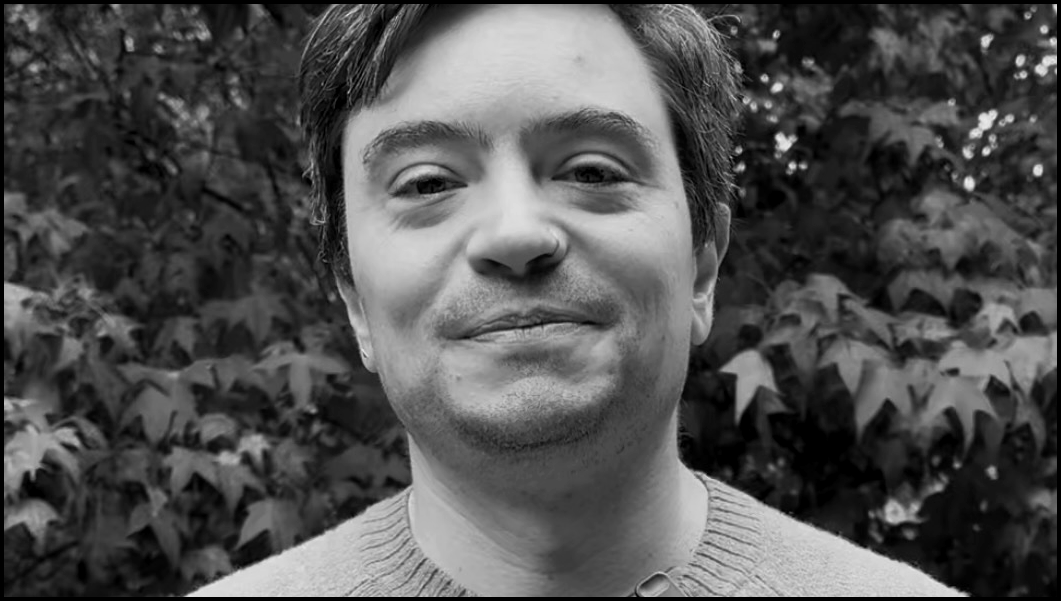
Juan Diego estudió literatura en la Universidad de los Andes (Bogotá, Colombia). Él quería ser escritor y, por eso, estudió guion cinematográfico en FAMU (Praga, Chequia), pero, al regresar a Bogotá, se enamoró del teatro. Trabajó por casi 10 años con la Fundación Teatro Libre de Bogotá en el área artística, como dramaturgo, administrativa, donde llegó a ser director ejecutivo, y pedagógica, dando clases de historia del teatro y de dramaturgia. El Teatro Libre es un grupo de teatro que se basa, sobre todo, en el teatro de texto, en montar obras del canon occidental y en fomentar la dramaturgia nacional. El autor adaptó obras de Bertolt Brecht y Franz Xavier Kroetz e hizo versiones teatrales de cuentos de Gabriel García Márquez y León Tolstoi. Ahí escribió sus primeras obras originales, que el grupo montó. Luego de la pandemia, él decidió que quería volver a estudiar y se fue a hacer una maestría en Estudios de Performance en la Universidad de Nueva York (NYU). Su carrera comenzó alrededor de un teatro muy textual y decidió estudiar lo opuesto: la performatividad en rituales, eventos deportivos y las acciones de la vida diaria, entre otros. Hoy cursa los últimos años de un doctorado en Estudios de Performance en la misma universidad, donde estudia el ninguneo (la acción de convertir a alguien en nadie) como práctica social durante la guerra civil colombiana. Sigue escribiendo teatro y buscando los puntos de conflicto y tensión entre lo aprendido en Bogotá y en Nueva York.
Juan Diego studied literature at the Universidad de los Andes (Bogotá, Colombia). He initially wanted to become a writer and therefore studied screenwriting at FAMU (Prague, Czech Republic), but upon returning to Bogotá he fell in love with theatre. He worked for nearly ten years with the Fundación Teatro Libre de Bogotá across several areas: artistic—as a playwright; administrative—eventually becoming executive director; and pedagogical—teaching theatre history and playwriting. Teatro Libre is a company grounded in text-based theatre, focused on staging works from the Western canon and promoting national dramaturgy. The author adapted works by Bertolt Brecht and Franz Xaver Kroetz, and created stage versions of stories by Gabriel García Márquez and Leo Tolstoy. It was there that he wrote his first original plays, which the company produced. After the pandemic, he decided to return to study and pursued a Master’s degree in Performance Studies at New York University (NYU). His career began within a highly text-centered theatre, and he chose to study its opposite: performativity in rituals, sporting events, and everyday actions, among other contexts. He is currently completing the final years of a PhD in Performance Studies at the same university, where he researches ninguneo (the act of turning someone into nobody) as a social practice during the Colombian civil war. He continues to write theatre, exploring points of conflict and tension between what he learned in Bogotá and in New York.
Escritura. / Style.
«El teatro es acción. Me enamoré de los Estudios de Performance en NYU porque no estudia al ser humano desde su ser, sino desde su hacer. El teatro permite que uno, como dramaturgo, no piense al ser humano como una entidad estable y fija, sino como algo que hace cosas en situaciones específicas y que puede cambiar cuando cambia su hacer. Sin embargo, yo escribo teatro desde el diálogo. Empiezo a escribir cuando escucho a alguien decir algo que me abre un mundo. No pretendo ponerme en los zapatos de los demás. Cuando siento que tengo la voz de un personaje en la cabeza, intento buscar dónde está esa voz en mí. No entiendo esa voz como un “otro”, pues al fin de cuentas todos estamos conectados. A mí me mueve, y esa también es mi postura estética y política, hacer personajes que vienen de mundos radicalmente distintos al mío y que piensen lo contrario a mí. No quiero entender o justificar esas voces. Quiero sentarme con ellas y que el público se siente con ellas también: que lo ajeno se vuelva cercano y viceversa; las violencias de una comunidad se parecen. He escrito sobre paramilitares de extrema derecha, narcos, fiscales corruptos o personas de mi familia que han cometido abusos. Mis obras, en este sentido, reflejan mi práctica: los sucesos suelen centrarse en personajes que no compaginan y tienen que buscar maneras de llevársela bien. Mi teatro nace en un país en guerra: al contrario se le ve como un enemigo y nunca se piensa que uno tiene mucho del contrario también.» (Juan Diego Arias).
«Theatre is action. I fell in love with Performance Studies at NYU because it does not study human beings through their being, but through their doing. Theatre allows one, as a playwright, not to think of the human being as a stable, fixed entity, but as something that does things in specific situations and can change when those actions change. However, I write theatre from dialogue. I begin writing when I hear someone say something that opens up a world for me. I do not try to put myself in other people’s shoes. When I feel I have a character’s voice in my head, I try to find where that voice is within me. I do not understand that voice as an “other,” because ultimately we are all connected. What moves me—and this is also my aesthetic and political stance—is creating characters who come from worlds radically different from my own and who think the opposite of me. I do not want to understand or justify those voices. I want to sit with them, and have the audience sit with them as well: so that the unfamiliar becomes familiar and vice versa; the violences of one community resemble another. I have written about far-right paramilitaries, drug traffickers, corrupt prosecutors, or members of my own family who have committed abuses. My work, in that sense, reflects my practice: situations tend to revolve around characters who do not get along and must find ways to coexist. My theatre is born in a country at war: the “other” is seen as an enemy, and it is never considered that one also contains much of that “other” within oneself.» (Juan Diego Arias).
Obras. / Plays.
-
2025. UN MURO
-
Teatro Estudio Julio Mario Santo Domingo, Bogotá, 2026
-
2022. LAS QUE HABLAN CON LAS PISCINAS
-
Revista Casapaís, No. 8, pp. 152-174, Uruguay, ISSN: 2730-5260
-
2020. EL ÚLTIMO PATRÓN
-
Primer acto publicado en Revista Temporales, NYU – MFA Creative Writing in Spanish, ISSN 2475-5036
-
2018. LAS RUINAS DEL AGUA Y DEL FUEGO
-
Espacio Odeón, Bogotá, 2022
Ascuas y azufre. Historia de Navidad. Las ruinas del agua y del fuego, Ediciones Mulato, ISBN: 978-958-59400-5-5
-
2018. HISTORIA DE NAVIDAD
-
Teatro Estudio Julio Mario Santo Domingo, Bogotá, 2018
Ascuas y azufre. Historia de Navidad. Las ruinas del agua y del fuego, Ediciones Mulato, ISBN: 978-958-59400-5-5
-
2016. ASCUAS Y AZUFRE
-
Festival Iberoamericano de Teatro de Bogotá, Teatro Libre del Centro, Bogotá, 2016
Ascuas y azufre. Historia de Navidad. Las ruinas del agua y del fuego, Ediciones Mulato, ISBN: 978-958-59400-5-5
-
Leyenda / Legend
-
Estreno / Premio / Beca / Publicación
Premiere / Award / Grant / Publication
Ascuas y azufre. Historia de Navidad. Las ruinas del agua y del fuego, Ediciones Mulato, ISBN: 978-958-59400-5-5
Ascuas y azufre. Historia de Navidad. Las ruinas del agua y del fuego, Ediciones Mulato, ISBN: 978-958-59400-5-5
Ascuas y azufre. Historia de Navidad. Las ruinas del agua y del fuego, Ediciones Mulato, ISBN: 978-958-59400-5-5
Premiere / Award / Grant / Publication