
Optometría Violeta
Jorge Jimeno Almeida, 2018
sobre / about

Datos técnicos. / Technical details.
Duración
>60'
Duration
>60'
Personajes
2
Characters
2
Actrices
1
Actresses
1
Actores
1
Actors
1
Público
Adulto
Audience
Adult
Formato
Pequeño
Format
Small
Sinopsis. / Synopsis.
El alcalde de Navaltortal ha convocado a toda la prensa para anunciar el cartel de las fiestas patronales. Este año, gracias a la amistad que el alcalde tiene con el prestigioso diseñador gráfico Adolfo Melero, el cartel contará con su firma. Un tanto con el que el alcalde piensa asegurarse la reelección y que está llevando en riguroso secreto. La concejala de cultura, que casualmente es la expareja del alcalde, tras ver el cartel presenta su dimisión ante lo que considera «un aberrante caso de machismo y uso del cuerpo de la mujer». La discusión está servida: ¿es el cartel gracioso y simpático o un ataque a la dignidad de las mujeres?
The mayor of Navaltortal has called the press together to announce the poster for the town’s patron saint festivities. This year, thanks to the mayor’s friendship with the renowned graphic designer Adolfo Melero, the poster will bear his signature. A coup that the mayor hopes will secure his re-election, and which he has kept strictly secret. The councillor for culture—who happens to be the mayor’s ex-partner—resigns after seeing the poster, which she describes as “an outrageous case of sexism and the use of the female body.” The debate is set: is the poster funny and charming, or an attack on women’s dignity?
Notas. / Notes on the piece.
El alcalde de Navaltortal [...] está a punto de sorprender a toda España con la presentación del cartel de las fiestas patronales [...] Sin embargo, es incapaz de darse cuenta de que el cartel encierra “un aberrante caso de machismo y uso del cuerpo de la mujer”. A partir de ahí el enredo y la discusión dialéctica entran en juego sin más dilación: ¿de verdad el cartel es discriminatorio, e incluso vejatorio con el sexo femenino? ¿O quizá es una exageración de la concejala, que ya no puede disociar su mirada feminista de cualquier broma o interpretación artística de la realidad? El espectador asiste a este juego de pimpón en el que ha de tomar partido necesariamente y, para su sorpresa, en ocasiones se encontrará asintiendo la brillantez discursiva de la concejala como comprendiendo el punto de vista del alcalde. Si el debate está servido, también lo está la empatía, uno de los grandes aciertos de esta obra que se aleja de toda doctrina o fanatismo. (María S. Robles, Mi butaquita).
The mayor of Navaltortal [...] is about to surprise all of Spain with the unveiling of the poster for the town’s patron saint festivities [...]. However, he is unable to see that the poster contains “an outrageous case of sexism and the use of the female body.” From that point on, the entanglement and the dialectical debate unfold without delay: is the poster truly discriminatory, even degrading towards women? Or is it perhaps an exaggeration on the part of the councillor, who can no longer separate her feminist perspective from any joke or artistic interpretation of reality? The audience witnesses this ping-pong exchange, in which they are compelled to take sides and, to their surprise, will sometimes find themselves agreeing with the councillor’s incisive arguments and at other times understanding the mayor’s point of view. If the debate is open, so too is empathy—one of the great achievements of this play, which steers clear of any doctrine or fanaticism. (María S. Robles, Mi butaquita).
Otros datos. / Other information.
Estreno: Artespacio Plot Point, Madrid
sobre / about


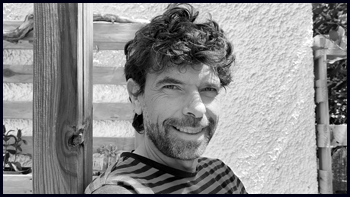

Biografía. / Biography.
(Gijón, 1974) Máster en Pensamiento y Creación Escénica Contemporánea e Ingeniero Industrial de primera formación, dio sus primeros pasos en las tablas de la mano de Diego Bergier en la Sala TIS del Madrid de 2004. Alberto Conejero, Verónica Gracia, María Velasco y Pepe Viyuela son algunas de las personas con quienes ha aprendido de las artes teatrales. En 2010 escribió y dirigió su primera pieza teatral, y desde entonces ha producido otras seis obras que llevan su firma con la compañía Montajes en el Abismo. Jorge trabaja además como actor o director en dichas producciones, sumando más de 500 representaciones en España, Argentina, Uruguay y Paraguay. En 2012 decidió explorar el mundo del cine, diplomándose en realización cinematográfica en la EICTV de San Antonio de los Baños (Cuba). Ha escrito y dirigido varios cortometrajes, además de otros montajes audiovisuales en el marco social o educativo. Desde 2017 reside en Cercedilla, donde dirige el Grupo de Teatro Municipal, y con el que lleva a escena otras creaciones propias, como Las cenizas del señor Camacho, ganadora del Premio de Textos Teatrales FETAM 2022. La pasión de Jorge es contar historias, escribiendo, produciendo, dirigiendo o actuando.
(Gijón, 1974) Holding a Master’s degree in Contemporary Performance Thought and Creation and originally trained as an Industrial Engineer, he took his first steps on stage under the guidance of Diego Bergier at Sala TIS in Madrid in 2004. Alberto Conejero, Verónica Gracia, María Velasco and Pepe Viyuela are among the artists from whom he learned the craft of theatre. In 2010 he wrote and directed his first play, and since then he has produced six more works under his own signature with the company Montajes en el Abismo. Jorge has also worked as an actor and director in these productions, accumulating more than 500 performances in Spain, Argentina, Uruguay and Paraguay. In 2012 he decided to explore the world of cinema, graduating in Film Directing from the EICTV in San Antonio de los Baños (Cuba). He has written and directed several short films, as well as other audiovisual projects in social and educational contexts. Since 2017 he has lived in Cercedilla, where he directs the Municipal Theatre Group, with which he stages further original creations such as Las cenizas del señor Camacho, winner of the FETAM 2022 Playwriting Award. Jorge’s passion is storytelling—through writing, producing, directing or acting.
Escritura. / Style.
«Me considero un contador de historias, y en el teatro he encontrado el medio donde me siento más cómodo para contarlas, (casi) siempre desde el humor. Si se puede, comedia. Y si además remueve, mejor. Probablemente la obra ‘Hoy, El diario de Adán y Eva’ con Miguel Ángel Solá y Blanca Oteyza —y la risa y las lágrimas que me provocó— tienen buena culpa de que me dedique a esto del teatro. Mis dramaturgias surgen de las experiencias que habito. Disfruto transformando la realidad en un formato que quepa en un escenario, ese lugar donde los personajes pueden decir lo que no se permitirían gritar en la calle. Pretendo aportar una mirada diferente sobre la teatralidad social en la que nos hallamos inmersos, resaltando sus incoherencias y absurdos. El público es el punto de referencia en mis dramaturgias. Considero que el teatro solo tiene sentido a partir de la mirada de los espectadores, así que procuro no perderles de vista cuando escribo. Me gusta dirigirme a todo tipo de públicos, buscando la universalidad del lenguaje teatral e intentando acercar el teatro a aquellas personas que menos lo frecuentan. Y por último, pongo especial cuidado en evitar los sermones y huyo de los mensajes totalmente cerrados. Es decir, pretendo dejar lugar a ese espacio de resonancia que he escuchado en más de una ocasión en boca de Pablo Messiez. Al menos eso intento.» (Jorge Jimeno Almeida).
«I consider myself a storyteller, and in theatre I have found the medium in which I feel most comfortable telling stories—(almost) always through humour. If possible, comedy. And if it also stirs something, even better. It is likely that the play Hoy, El diario de Adán y Eva, with Miguel Ángel Solá and Blanca Oteyza—and the laughter and tears it provoked in me—played a significant role in my decision to dedicate myself to theatre. My dramaturgy arises from the experiences I inhabit. I enjoy transforming reality into a format that can fit on a stage, that space where characters can say what they would never dare to shout in the street. I aim to offer a different perspective on the social theatricality in which we are immersed, highlighting its incoherences and absurdities. The audience is the point of reference in my dramaturgy. I believe theatre only makes sense through the gaze of the spectators, so I try not to lose sight of them when I write. I like to address all kinds of audiences, seeking the universality of theatrical language and trying to bring theatre closer to those who engage with it less frequently. And finally, I take special care to avoid sermons and steer clear of fully closed messages. In other words, I try to leave room for that ‘space of resonance’ I have heard mentioned on more than one occasion by Pablo Messiez. At least, that is what I try to do.» (Jorge Jimeno Almeida).
Obras. / Plays.
-
2023. EL CORTACÉSPED
-
Sala Lagrada, Madrid
-
2022. LAS CENIZAS DEL SEÑOR CAMACHO
-
Teatro Montalvo, Cercedilla
Premio de Textos Teatrales FETAM 2022
-
2020. UN ESPECTADOR ACCIDENTAL O LAS OCHO DE LA TARDE
-
Teatro Municipal, Becerril de la Sierra, Madrid
Ediciones Antígona
-
2018. OPTOMETRÍA VIOLETA
-
Artespacio Plot Point, Madrid
-
2017. CUMBRE MUNDIAL. UNA COMEDIA ABSURDA PARA TERMINAR CON LOS POBRES
-
Centro Cultural Sara Montiel, Madrid
Finalista IV Premio Irreverentes de Comedia
Ediciones Irreverentes
-
2016. MANUAL DE LA PERFECTA VIAJERA
-
Artespacio Plot Point, Madrid
-
2013. LA DESPEDIDA
-
Festival Teatro Off, Málaga
Ediciones Antígona
-
2011. EL OTRO SENTIDO DE LA VIDA
-
Garaje Lumiere, Madrid
-
Leyenda / Legend
-
Estreno / Premio / Beca / Publicación
Premiere / Award / Grant / Publication
Premio de Textos Teatrales FETAM 2022
Ediciones Antígona
Finalista IV Premio Irreverentes de Comedia
Ediciones Irreverentes
Ediciones Antígona
Premiere / Award / Grant / Publication
sus obras en / their works on

-
 2023 >60' 1 2
EL CORTACÉSPED
Jorge Jimeno Almeida -
 2020 >60' 1 1
UN ESPECTADOR ACCIDENTAL O LAS OCHO DE LA TARDE
Jorge Jimeno Almeida -
 2018 >60' 1 1
OPTOMETRÍA VIOLETA
Jorge Jimeno Almeida -
2017 >60' 2 2
CUMBRE MUNDIAL. UNA COMEDIA ABSURDA PARA TERMINAR CON LOS POBRES
Jorge Jimeno Almeida -
 2016 >60' 1 1
MANUAL DE LA PERFECTA VIAJERA
Jorge Jimeno Almeida -
 2013 >60' 1 1
LA DESPEDIDA
Jorge Jimeno Almeida