
La trágica mort de la barbuda
Ruth Vilar, 2008
sobre

Datos técnicos.
Duración
>60'
Personajes
5
Actrices
2
Actores
1
Público
Adulto
Formato
Mediano
Sinopsis.
Una cabaña sobria se esconde en el claro de un bosque austríaco a finales de los años veinte. Su propietario es extranjero y nunca ha puesto un pie en ella, que permanece al cuidado de un joven flacucho. Un día se presenta allí una mujer extraña ‒cosmopolita, inteligente y muy barbuda‒ con permiso del dueño para alojarse en la casa. Trae libros, piensa, y desconcierta al guardés imberbe con conversaciones que lo obligan a usar la lógica y a desafiar sus prejuicios. Entretanto, un astrólogo de mal agüero ronda por el bosque. Espera con impaciencia la consumación de una tragedia.
A spare cabin hides in a forest clearing in Austria at the end of the 1920s. Its owner is a foreigner who has never set foot in it; the place is left in the care of a thin young man. One day, a strange woman — cosmopolitan, intelligent, and very bearded — arrives with permission from the owner to stay in the house. She brings books, she thinks, and unsettles the young caretaker with conversations that force him to use logic and challenge his prejudices. Meanwhile, a sinister astrologer prowls the forest, waiting impatiently for the unfolding of a tragedy.
Notas.
"La trágica muerte de la barbuda" reflexiona sobre temas como la libertad y el destino, el papel que el género impone al individuo en el seno de la sociedad, el comportamiento que se considera admisible o respetable, o el juicio moral al que se somete a todo individuo.
La trágica muerte de la barbuda reflects on themes such as freedom and destiny, the role that gender imposes on the individual within society, the forms of behaviour considered acceptable or respectable, and the moral judgement to which every individual is subjected.
Otros datos.
Publicación: RE&MA12 (OFF Cartell)
sobre / about


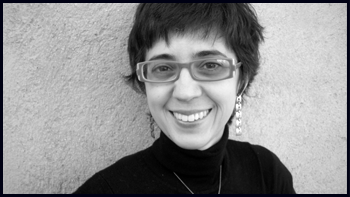

Biografía. / Biography.
«Estudié interpretación en el Institut del Teatre de Barcelona y creación literaria en la Universidad Pompeu Fabra. En 2006 me embarqué con el actor Salva Artesero en una aventura apasionante: la compañía Cos de Lletra. Hemos concentrado nuestra labor en la investigación, creación y divulgación de textos y puestas en escena que proclamen el vínculo indisoluble entre palabra literaria y vida. A lo largo de esta exploración compartida: he colaborado en diferentes publicaciones con artículos sobre teatro; he adaptado los apuntes a vuelapluma de Lorca y las estampas de posguerra de Ana María Matute para convertirlos en sendos espectáculos delicados e inquietantes; he estrenado mis textos Las ávidas raíces, La puerta blindada y Muescas más hondas. Y, sobre todo, escribo teatro.» (Ruth Vilar).
«I studied Acting at the Institut del Teatre in Barcelona and Creative Writing at Pompeu Fabra University. In 2006, I embarked on a passionate adventure with actor Salva Artesero: the theatre company Cos de Lletra. We have focused our work on the research, creation and dissemination of texts and stage productions that proclaim the inseparable bond between literary language and life. Throughout this shared exploration, I have collaborated on various publications writing articles on theatre; adapted Federico García Lorca’s hastily scribbled notes and Ana María Matute’s post-war sketches into two delicate and unsettling stage productions; and premiered my own plays Las ávidas raíces, La puerta blindada and Muescas más hondas. Above all, I write theatre.» (Ruth Vilar).
Escritura. / Style.
«Amo la vida –en su sentido más ancho y abarcador– y amo la palabra por cuanto tiene de receptáculo, semilla, fósil o pedernal de vida. Ese amor que guía o arrastra mis obras, se manifiesta tanto en los temas que abordan y desarrollan como en su minuciosa elaboración literaria. Mi escritura discurre de manera natural por cualquiera de los géneros y prescinde de los límites formales que tradicionalmente los separan: así, mi teatro abraza lo narrativo, lo poético y lo ensayístico. La misma hibridación vale para cuanto escribo. Apuesto por asuntos de orden moral, incógnitas o tabúes profundamente humanos, que se remontan al principio de los tiempos y aún suponen un dilema de ardua resolución. Por su gravedad inherente, les procuro un tratamiento deliberadamente sencillo –que no esquemático–: inteligible, visualizable, variado, ligero, resuelto a interpelar al lector o al espectador. Me decanto por la palabra sencilla y la emoción sutil, el mito y la revelación, los personajes que reconocen en su interior un impulso transformador –que los empuja más allá de sí mismos, de su identidad y de sus fuerzas– y lo siguen.» (Ruth Vilar).
«I love life – in the broadest and most wide-reaching sense of the word – and I love words for the extent that they act as a receptacle, seed, fossil or flint of life. This love that guides or grabs hold of my works is shown in the topics that are addressed and developed therein, as well as in their meticulous literary elaboration. My writing naturally flows through a mixture of genres, straddling the formal limits that have traditionally separated them: my plays therefore embrace the narrative, the poetic and the essayistic. The same hybridisation is valid for everything I write. I choose to write about moral issues, the unknown or profoundly human taboos, that date back to the beginning of time and still suppose a dilemma of arduous resolution. Owing to their inherent gravity, I deal with them in a deliberately simple and non-schematic manner: comprehensible, viewable, varied, light and determined to ask questions to the reader or spectator. I prefer simpler words and subtler emotions, myth and revelation, and characters who acknowledge the transformative impulse found within them – pushing them away from themselves, their identity and their strengths – and they follow it.» (Ruth Vilar).
Obras. / Plays.
-
2021. 7 PARELLS DE PEUS
-
Festival LOLA, Esparreguera
Beca de la Generalitat de Catalunya para la creación literaria
Oidà Editorial
-
2020. CERCA DEL MAR
-
Teatro Dau al Sec, Barcelona
Segundo Premi Dau
Oidà Editorial
-
2020. DÍAS SON AVIONES
-
De los días sin abrazos, Ediciones Invasoras, 2020
-
2020. TU DESPENSA REBOSA
-
Ábrete, cielo. 125 voces en contra de la mina de Calabor, Ediciones Invasoras, 2020
-
2020. NO ES UNA OPCIÓN
-
Sen(o)fobia, Ediciones Invasoras, 2020
-
2020. LA PUERTA BLINDADA
-
Ediciones Invasoras, 2020
-
2017. KIRUNA
-
(Lectura dramatizada) Sala Mirador, Madrid, 2017
Obra escrita dentro del programa de dramaturgias inducidas "Planeta Vulnerable" del Nuevo Teatro Fronterizo
-
2017. LAS ÁVIDAS RAÍCES
-
Sala Sandaru, Barcelona
Obra escrita con la compañía Cos de Lletra durante la residencia artística Kinètic
Ediciones Invasoras
-
2016. LA PEDRA A TROSSOS
-
"Teatre de secundària", Barcelona, RE&MA12, 2016
Volumen dedicado al teatro juvenil, que recoge 5 piezas de distintos autores
-
2015. CINC VARES DE TERRA
-
(Lectura dramatizada) Teatre Romea, Barcelona, 2015
RE&MA 12, 2017
-
2015. PROHIBIDO LEER TEATRO
-
Revista Quimera
-
2014. ESA MANZANA AMARGA
-
(Lecturas dramatizadas) Nuevo Teatro Fronterizo, Madrid, 2016 + Teatro de la Estación, Zaragoza, 2017 + La Inútil, Barcelona, 2018
-
2014. LES LÍNIES IMAGINARIES
-
X Premi de Teatre de Calldetenes
Cal Siller, 2018
-
2014. OBJETOS PUNZANTES
-
Estreno parcial bajo el título "Muescas más hondas": Teatre Akadèmia, Barcelona
Ediciones Invasoras, 2017
Serie de piezas breves
-
2012. LA PUERTA BLINDADA
-
Teatro Lagrada, Madrid
XIX Premio Internacional de Teatro de Autor Domingo Pérez Minik de la Universidad de La Laguna
Universidad de La Laguna, 2016 + Ediciones Invasoras, 2020
-
2011. TEATRO SOBRE PLANO
-
Revista Quimera
Carrusel de ogritos, Madrid, AAT, 2017
Volumen dedicado al teatro infantil y juvenil, que recoge 5 piezas de distintos autores
-
2010. L'ESPEDAÇAMENT / EL DESPIECE
-
(Lectura dramatizada) L'Obrador de la Sala Beckett, Barcelona, 2011
RE&MA 12, 2011
-
2009. A CUERPO
-
Novela dramática
Inédita
-
2009. EL AMIGO INVISIBLE
-
Revista Teína
-
2008. LA TRÁGICA MORT DE LA BARBUDA
-
(Lectura dramatizada) Festival Primavera Vaca, SGAE Barcelona, 2013
RE&MA 12, 2013
-
Leyenda / Legend
-
Estreno / Premio / Beca / Publicación
Premiere / Award / Grant / Publication
Beca de la Generalitat de Catalunya para la creación literaria
Oidà Editorial
Segundo Premi Dau
Oidà Editorial
Obra escrita dentro del programa de dramaturgias inducidas "Planeta Vulnerable" del Nuevo Teatro Fronterizo
Obra escrita con la compañía Cos de Lletra durante la residencia artística Kinètic
Ediciones Invasoras
Volumen dedicado al teatro juvenil, que recoge 5 piezas de distintos autores
RE&MA 12, 2017
Cal Siller, 2018
Ediciones Invasoras, 2017
Serie de piezas breves
XIX Premio Internacional de Teatro de Autor Domingo Pérez Minik de la Universidad de La Laguna
Universidad de La Laguna, 2016 + Ediciones Invasoras, 2020
Carrusel de ogritos, Madrid, AAT, 2017
Volumen dedicado al teatro infantil y juvenil, que recoge 5 piezas de distintos autores
RE&MA 12, 2011
Inédita
RE&MA 12, 2013
Premiere / Award / Grant / Publication
sus obras en / their works on

-
 2021 30'-60' 1 1
7 PARELLS DE PEUS
Ruth Vilar -
 2020 >60' 1 0
CERCA DEL MAR
Ruth Vilar -
 2020 <30' 3 3
DÍAS SON AVIONES
Ruth Vilar -
 2020 <30' 1 1
TU DESPENSA REBOSA
Ruth Vilar -
 2020 <30' 6-10 6-10
NO ES UNA OPCIÓN
Ruth Vilar -
 2016 <30' 4 4
LA PEDRA A TROSSOS
Ruth Vilar -
 2017 30'-60' 1 1
LAS ÁVIDAS RAÍCES
Ruth Vilar -
2008 >60' 2 1
LA TRÁGICA MORT DE LA BARBUDA
Ruth Vilar -
 2014 30'-60' 1 0
ESA MANZANA AMARGA
Ruth Vilar -
2012 >60' 1 1
LA PUERTA BLINDADA
Ruth Vilar -
2015 >60' 4 2
CINC VARES DE TERRA
Ruth Vilar -
 2015 >60' 5 5
OBJETOS PUNZANTES
Ruth Vilar -
 2017 <30' 2 2
KIRUNA
Ruth Vilar -
2010 30'-60' 2 1
EL DESPIECE
Ruth Vilar -
 2014 >60' 3 4
LES LÍNIES IMAGINARIES
Ruth Vilar
