
Sólo un anuncio
Alberto Ramos, 2013
sobre / about

Datos técnicos. / Technical details.
Duración
>60'
Duration
>60'
Personajes
4
Characters
4
Actrices
2
Actresses
2
Actores
2
Actors
2
Público
Adulto
Audience
Adult
Formato
Pequeño
Format
Small
Sinopsis. / Synopsis.
Herni, Elen y Diego deben ver dos esbozos de anuncios, juzgarlos y escoger uno. No importa que ninguno de ellos se dedique a la publicidad. No importa que uno de ellos sea ciego. Al fin y al cabo, sólo son anuncios. Anuncios de agua. Cualquiera puede opinar sobre un anuncio de agua. Y si la moderadora es una profesional como Gracia, nada puede fallar. Toda la reunión, o focus group, está siendo observada por los clientes. Se encuentran al otro lado de un espejo y no pueden establecer contacto con los participantes. Es de sentido común. Pero el mundo de la publicidad no se rige por el sentido común.
Herni, Elen, and Diego must review two draft ads, judge them, and choose one. It doesn’t matter that none of them work in advertising. It doesn’t matter that one of them is blind. After all, they’re just ads. Water ads. Anyone can have an opinion on a water ad. And if the moderator is a professional like Gracia, nothing can go wrong. The entire meeting, or focus group, is being observed by the clients. They are on the other side of a one-way mirror and cannot make contact with the participants. It’s common sense. But the world of advertising does not follow common sense.
Notas. / Notes on the piece.
Dice Carles Mallol, director de la obra: «Alberto Ramos ha escrito una comedia. Alberto Ramos ha escrito un thriller. Alberto Ramos ha escrito las dos cosas a la vez. Con la mano derecha ha cogido el mundo de la publicidad y lo ha sacudido con una mirada crítica, y con la mano izquierda se ha reído de lo que podemos ser capaces de hacer por amor. (…) Los personajes de 'Sólo un anuncio', que quede claro, son unos desgraciados. Ninguno de ellos tiene lo que quiere. Sólo les faltaba meterse en el mundo de los anuncios, donde la aleatoriedad de todo ello poca estabilidad les puede dar.»
Carles Mallol, the director of the play, says: “Alberto Ramos has written a comedy. Alberto Ramos has written a thriller. Alberto Ramos has written both at the same time. With his right hand, he has grabbed the world of advertising and shaken it with a critical eye, and with his left hand, he has laughed at what we are capable of doing for love. (…) The characters in ‘Sólo un anuncio’, let’s be clear, are miserable. None of them gets what they want. All they needed was to step into the world of advertising, where the randomness of everything gives them little stability.”
Otros datos. / Other information.
Estreno: Teatret, Esparreguera. Festival Lola
Temporada en Sala Flyhard, Barcelona
Finalista del VII Premio Quim Masó
Publicación: Edicions Sala Flyhard
sobre / about


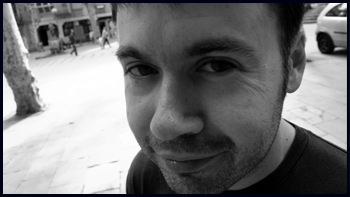

Biografía. / Biography.
«Aunque no he logrado vivir del teatro, estoy vivo gracias a él: mis padres se conocieron en una compañía amateur. Sin embargo, muchas décadas y algunas obras después, continúo sintiéndome un intruso. Quizá porque accedí por la puerta de atrás, una puerta que ni siquiera sabía que estaba abierta. Un verano se me ocurrió escribir una comedia sobre un falso superhéroe y un superhéroe falso. Sin más intención que divertirme y, de paso, resarcirme del desgaste sufrido en los mundos de la publicidad (mi profesión) y el guion audiovisual (mi vocación frustrada). Jamás imaginé que aquel texto pudiera saltar a un escenario. Pero saltó: siete veranos después, un director lo encontró por azar y decidió montarlo. De repente, un mundo nuevo y milenario se abría ante mí: no sólo podía escribir obras de teatro, sino que había unas personas dispuestas a darles vida, y a vivirlas. Aunque yo fuera un intruso. Aunque lo siga siendo. O tal vez no. Tal vez el único intruso sea el teatro mismo; como un primo lejano con acento griego que te visita por sorpresa, se queda un par de días y, cuando quieres darte cuenta, ya se ha instalado de por vida.» (Alberto Ramos).
«Although I haven’t managed to make a living from theatre, I’m alive because of it: my parents met in an amateur company. And yet, many decades and a few plays later, I still feel like an intruder. Maybe because I came in through the back door—a door I didn’t even know was open. One summer, I had the idea to write a comedy about a fake superhero and a falsely accused one. My only intention was to have fun and, along the way, recover from the wear and tear of the advertising world (my profession) and screenwriting (my frustrated vocation). I never imagined that script would make it to a stage. But it did: seven summers later, a director stumbled upon it and decided to produce it. Suddenly, a new and ancient world opened up before me—not only could I write plays, but there were people willing to bring them to life, and to live them. Even if I was an intruder. Even if I still am. Or maybe not. Maybe the only intruder is theatre itself; like a distant cousin with a Greek accent who shows up unannounced, stays for a couple of days, and before you know it, has moved in for good.» (Alberto Ramos).
Escritura. / Style.
«Versión larga: mi escritura es un cruce bastardo de géneros. Ciencia ficción y comedia, thriller y comedia, fantasía y comedia, terror y comedia, drama y comedia, comedia y comedia. Versión corta: escribo comedias. Versión cursi: las comedias me escriben a mí. Versión ampliada: me gusta contar historias, sin importar el género. Sin embargo, antes o después aparece la comedia: en una escena, en una réplica, en una acotación. La comedia está ahí, al acecho, esperando el mejor momento para saltar, para hundir los colmillos en la yugular del texto. Versión tras el ataque: la comedia es buena. La comedia es mi amiga. La comedia es mi aliada contra la afectación y la solemnidad. La comedia es la kriptonita que humaniza a los héroes. La comedia es una máscara que me permite enseñar las vergüenzas, también las propias. Versión exculpatoria: si mi próxima obra no es una comedia, por favor, no me lo tengáis en cuenta.» (Alberto Ramos).
«Long version: my writing style is a bastard amalgamation of genres. Science fiction and comedy; thriller and comedy; fantasy and comedy; terror and comedy; drama and comedy; comedy and comedy. Short version: I write comedies. Cheesy version: comedies write me. Extended version: I like to tell stories, regardless of the genre. However, comedy always appears sooner or later: in a scene, in a retort or in stage directions. Comedy is always there, lurking in the background, waiting for the opportune moment to pounce, to sink its teeth into the jugular vein of the text. Version after the attack: comedy is good. Comedy is my friend. Comedy is my ally against affectation and solemnity. Comedy is the kryptonite that makes our heroes human. Comedy is a mask that allows me to exhibit shame, even my own. Exculpatory version: if my next piece isn’t a comedy, please don’t blame me.» (Alberto Ramos).
Obras. / Plays.
-
2020. L'INFINIT (EL INFINITO)
-
Microteatre Barcelona
-
2017. LA PADRINA (LA MADRINA)
-
Microteatre Barcelona
-
2016. GOYO
-
Premi Ciutat de Manacor de Teatre 2020
Edicions Món de Llibres
-
2016. TOTS ELS FILLS (TODOS LOS HIJOS)
-
Microteatre Barcelona
-
2015. EL HOMBRE DEL FRAC
-
Teatro El Montacargas, Madrid
Programa de desarrollo Cimientos 2015, IATI Theater, Nueva York
-
2015. BETÚN
-
III Laboratorio de Escritura Teatral, Fundación SGAE
Fundación SGAE, Teatro Autor
-
2015. ELS MICROMECENES (LOS MICROMECENAS)
-
Sala La Planeta, Girona. Torneo de Dramaturgia del Festival Temporada Alta
-
2014. INFECTE (INFECTO)
-
Versus Teatre, Barcelona
-
2013. PEP TALK
-
Axis Ballymun, Dublín
Festivales Fringe de Nueva York y Lola de Esparreguera
Temporada en La Seca Espai Brossa, Barcelona
-
2013. PAU I EL CONQUERIDOR (PABLO I EL CONQUISTADOR)
-
Sala La Planeta, Girona
-
2013. NOMÉS UN ANUNCI (SÓLO UN ANUNCIO)
-
Teatret, Esparreguera. Festival Lola
Temporada en Sala Flyhard, Barcelona
Finalista del VII Premio Quim Masó
Edicions Sala Flyhard
-
2012. NO EM DIC MANUEL (NO ME LLAMO MANUEL)
-
Teatre Lliure. Ciclo Aixopluc - 3 d'un glop
-
2012. YAYOFLAUTAS LEJANOS
-
Microteatro por Dinero, Madrid
-
2003. LOS ÚLTIMOS DÍAS DE CLARK K.
-
Sala Flyhard, Barcelona
Casa Cultural Mocha Graña, Lima y Teatro Helénico, Ciudad de México
Finalista del I Premio Bubok de Creación Literaria
Bubok
-
Leyenda / Legend
-
Estreno / Premio / Beca / Publicación
Premiere / Award / Grant / Publication
Edicions Món de Llibres
Programa de desarrollo Cimientos 2015, IATI Theater, Nueva York
Fundación SGAE, Teatro Autor
Festivales Fringe de Nueva York y Lola de Esparreguera
Temporada en La Seca Espai Brossa, Barcelona
Temporada en Sala Flyhard, Barcelona
Finalista del VII Premio Quim Masó
Edicions Sala Flyhard
Casa Cultural Mocha Graña, Lima y Teatro Helénico, Ciudad de México
Finalista del I Premio Bubok de Creación Literaria
Bubok
Premiere / Award / Grant / Publication
sus obras en / their works on

-
 2016 >60' 2 1
GOYO
Alberto Ramos -
 2015 >60' 0 2
EL HOMBRE DEL FRAC
Alberto Ramos -
 2015 >60' 1 1
LOS MICROMECENAS
Alberto Ramos -
 2013 >60' 0 1
PABLO I EL CONQUISTADOR
Alberto Ramos -
 2015 >60' 0 1
BETÚN
Alberto Ramos -
 2014 >60' 4 2
INFECTO
Alberto Ramos -
 2013 >60' 2 2
SÓLO UN ANUNCIO
Alberto Ramos -
 2003 >60' 2 2
LOS ÚLTIMOS DÍAS DE CLARK K.
Alberto Ramos
sus traducciones en / their translations on
-
2016 >60' 2 1 CAT
GOYO
Alberto Ramos -
2015 >60' 0 2 CAT
L'HOME DEL FRAC
Alberto Ramos -
2015 >60' 0 1 CAT
BETUM
Alberto Ramos -
2014 >60' 4 2 CAT
INFECTE
Alberto Ramos -
2003 >60' 2 2 CAT
ELS ÚLTIMS DIES DE CLARK K.
Alberto Ramos -
 2003 >60' 2 2 ENG
THE LAST DAYS OF CLARK K.
Alberto Ramos -
 2013 >60' 2 2 CAT
NOMÉS UN ANUNCI
Alberto Ramos -
2013 >60' 0 1 CAT
PAU I EL CONQUERIDOR
Alberto Ramos -
2015 >60' 1 1 CAT
ELS MICROMECENES
Alberto Ramos
